By Nvasekie N. Konneh
One of my favorite websites is Allafrica.com. Once I am on that site, I go to the drop down
menus on the upper left hand side. The drop down menus showcases countries, topics, development, BizTech, entertainment, etc. Of these, my favorites are books, book review music, music review, multimedia, etc. If you click on book or book review, the page lists countries with news about books, book publishing and music. Several countries dominate always. Among them are Angola, Nigeria, Kenya, Zimbabwe, Uganda etc. These countries are always dominating on this list. That means the media institutions in those countries are truly diversified with something to read by readers with diverse interests. This is also an indication that there are lots of artistic or literary activities going on in those countries. Every now and then there is news about new titles of books, a book launching, or book reviews. These are all regular futures on AllAfrica.com.
This simply shows that the media in those countries are curiously following the arts and cultural developments on the regular basis. It also means that people in the arts and culture sector are media savvy and are always engaging the media about their latest efforts. This shows real organization on the part of cultural promoters in those countries. Liberia at this point stands at the opposite end of these countries. On any given day when you buy newspapers in Monrovia, the headlines are always political. The headline is not considered strong enough if it’s not about politics. When you listen to radio, not much is different except the fact that radio stations can play music, and sometimes shares contents other than politics. Except for foreign news, music, or movies, our TV stations are not different either. You can hardly see any original programming except political speeches of politicians running for elected offices. As such, some may find Liberian media, both print and electronic to be too dry and uninteresting.
Go to any intellectual forum anywhere around town or on school campuses the picture is the same. When you talk about anything else some may look at you as if to say you are from the outer space. To most of our media practitioners, the words literary criticism is not something they are more likely to publish in their papers. If book reviews will be published, it will be once in the blue moon. To put it another way, book publishing or literary criticism is not regular information shared in Liberian media. It also means that readers are not eager to read any critical book review that will determine whether or not to buy books written by Liberian writers. Except recently with the opening of the Forte and Kpoto book store, Liberia has been a country with no library system or book stores. Libraries, book stores, literary festivals are parts of the vibrant arts and culture scenes of any country.
There are no reading clubs either in school or in society in general that students or non-students could read and critique books written by Liberian writers. Besides that too, not often you come across books written by Liberians before we talk about reviewing them. In order for us to have a thriving book industry, we must have not only writers; we must also have readers and media that is interested in promoting such leisure activities.
Even though the above scenario seems to be the case in Liberia, it’s fair to say in our global
village of today, Liberians are writing more than ever before, but mostly abroad and news about their works don’t normally find its way into the pages of newspaper back home. While some Liberian writers back home are not getting much attention for their works, Liberian writers living abroad have managed to publish and promote their works on the internet. In this internet age, one would have expected more dialogue and critical analyses of the contemporary Liberian literature. Or maybe this is already taking place on the internet far more than in the pages of newspapers or college campuses back home in Liberia? While literary criticism of body of literature produced by Liberian writers may appear in the Liberian newspapers once in the blue moon, and more frequently now on the websites, a book of such nature is not common either.
Just as we are lamenting the condition of Liberian writers, it’s no different from those from other creative sectors such as those in the music and movie industries. To address this situation, the Liberia Cultural Ambassador organized a cultural festival on Providence Island in January 2026 to which people from the Liberian creative sectors were invited. There were great presentations by the Liberian Movie Union, Liberian Musicians Union, Liberian writers, etc. Could this cultural festival be a sign of great things to come under the leadership of Liberia’s cultural ambassador?
Since last year, the Liberian National Tourism Authority was launched. Since then it too has had several programs with focus on the Liberian creative sectors. How significant can the LNTA contribute to the vibrant cultural and artistic culture which is very important for tourism? Books, music, content creation are all parts of the mix and how can the tourism authority contribute to the success of these sectors? Will the tourism authority work in collaboration with the cultural ambassador or does its own things separately? From the various programs it has organized to which people from the various creative sectors were invited, one could interpret that to mean that it has the commitment to do something that may contribute to the positive development of the creative sectors.
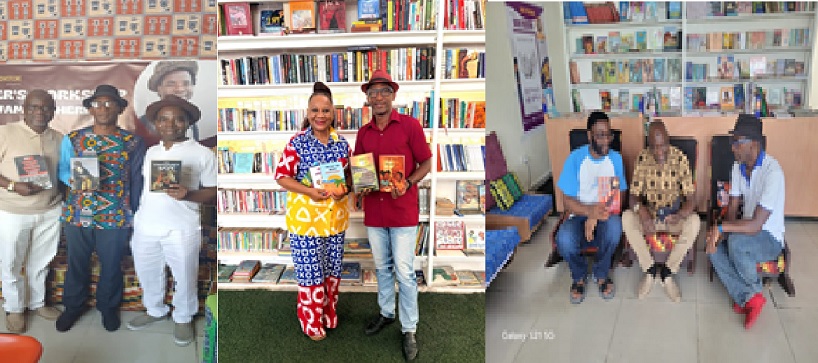
Though Liberia is a literary desert land, one good thing that is happening now for the literary space is the establishment of the Forte Publishing Company spearheaded by a prolific Liberian writer and promoter, Othniel Forte. With the numbers of books that have been produced and promoted by the entity plus its regular literary activities such as book festivals, literary workshops, book launchings, one can fairly say that this is a light at the end of the tunnel.
Liberia Writer Association (LAW) is now under a new leadership. Will James Dwalue, the newly elected president of the association, do anything that may contribute significantly to changing the Liberia’s literary landscape for the better?