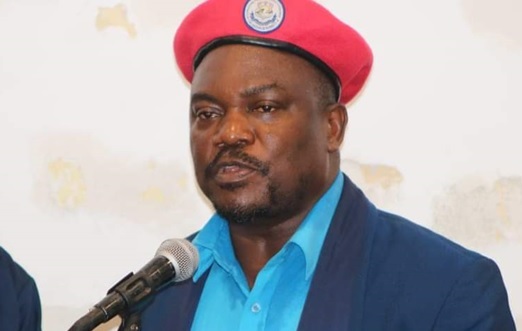

A sub-regional media group, West Africa Journalist Association, WAJA, has condemned the leadership of the House of Representatives for its recent expulsion of Montserrado County District-10 Representative, Yekeh Kolubah.
The group’s President and former President of the Press Union of Liberia, Peter Quaqua, in a statement argued that even those accused of the worst crimes—war crimes, crimes against humanity, rape, armed robbery—are accorded due process. “That’s how justice works. It is what separates law from vengeance, and democracy from tyranny,” the West African media group’s statement emphasized.
Due process, it said, means you do not punish first and explain later. It means people must be heard, procedures followed, and decisions fair.
The WAJA’s statement further argued that when a legislature acts with unusual speed, sidesteps established procedures, or appears to disregard the authority of the Supreme Court, it raises serious constitutional concerns—not mere political questions, adding that it is not about personalities, but about the law. “Why the rush,” it asked.
Mr. Quaqua quoted by the WAJA statement said when rules are bent or ignored to target one individual today, a precedence is set for the abuse of power tomorrow, noting that it is how democratic erosion begins— with calculated shortcuts and selective respect for the law.
“This is what legislative tyranny looks like: when a body entrusted with making laws begins to act as though it is above them,” the statement further noted.
WAJA in its statement said it is not suggesting that the legislature should not exercise power, but power without restraint becomes dangerous.
It said a body created to protect democracy must never become careless with the principles that sustain it.
“It sends a wrong message—that fairness is negotiable, that legal safeguards can be bypassed. This is unacceptable in any constitutional democracy,” the statement also said.
It urged the Legislature, specifically the House of Representatives, to make no mistake, indicating that if the law cannot protect the unpopular, it cannot protect anyone, and and when fairness becomes conditional, justice itself is no longer secure—it becomes a tool of power,” the WAJA’s statement concluded.