Liberianization as an economic policy designed to empower Liberian businesses was launched in 1976. Since the Liberian economy were or is still dominated by foreigners, a condition which makes Liberians to look like spectators in their own economy, Liberianization was designed as a policy to set aside certain businesses exclusively for Liberian citizens. This was intended to encourage and support Liberian entrepreneurship. It was aimed at promoting "national economic sovereignty and protecting local entrepreneurs from foreign domination."
Businesses set aside exclusively for Liberians included transportation such as taxi, trucks and other passenger vehicles, retail sales which include rice, ice cream, planks, cement, and timber. It also included services such as travel and PR agencies, tire and shoe repairs, gas station, block factories, etc.
50 years later, has Liberalization policy been successfully implemented? What effect it has had on Liberian businesses? What’s the percentage of Liberian business success that can directly or indirectly linked to Liberianization policy? Are Liberians in business doing much better today than they were 50 years ago when Liberianization policy took effect?
I shared these questions recently with my social media followers. There were many responses. Here is what someone said, "Liberianization policy began with a noble goal: to reserve certain sectors of the economy for Liberians and strengthen local ownership. In its early years, the policy was enforced more rigorously and achieved some measure of success, with businesses designated for Liberians largely remaining under Liberian control. Over time, however, enforcement weakened, and the policy increasingly drifted from its original intent. Today, lax oversight has allowed foreign nationals to dominate many of these spaces, often competing directly with Liberian entrepreneurs and leaving many discouraged or pushed out of the business sector."
Several respondents echoed the same sentiment. Some said it has been a failure. If the Liberianization policy has not successful, could it be because successive governments over the years dropped the ball? Or have the governments over the years made sure the policy is enforced?
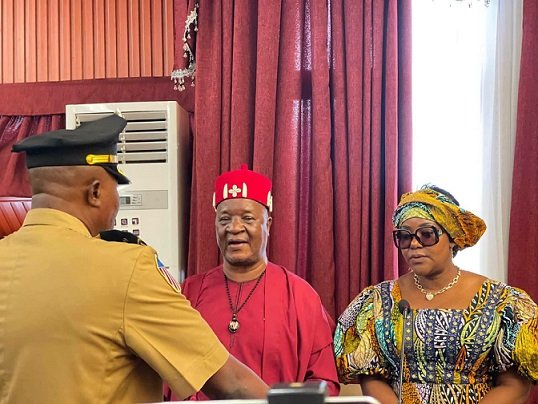
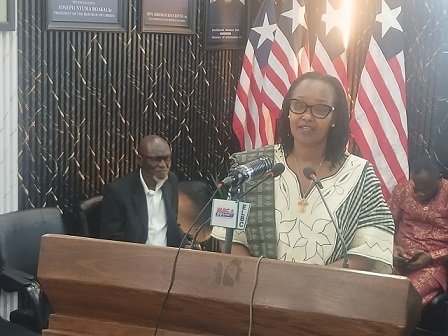
On these very questions, Vice President Jeremiah Koung agrees that successive governments over the years have not been effective in stopping foreigners from violating the law meant to protect and empower local businesses. As such, at a recent meeting with the business community, he warned that "grave consequences will befall anyone or groups flouting laws that protect businesses reserved exclusively for Liberians.”
He gave a 10-day ultimatum to foreign business people to desist from violating the law or face grave consequences for their actions. This is clearly an indication that the current government led by President Joseph Boakai is ready to enforce the Liberianization policy, if it was not adequately enforced before. VP Koung made reference to the Investment Act of 2010 which he said is the "legal framework meant purposely to protect local participation in specific sectors" of our economy.
The fact that the VP met with the business community with the plan to enforce or reinforce the Liberianization policy is a step in the right direction. If previous governments were relaxed with the law meant to promote Liberian businesses, we hope this government will succeed in making sure the Liberian businesses are protected, supported, and promoted to succeed.
In addition to setting aside certain businesses for Liberians, government should take a step further by allocating percentage of shares of various concessions to Liberian citizens. That’s the only way we can make Liberians to not be mere spectators in their own economy. The government must make intentional efforts to empower Liberian businesses through government contracts for goods and services. The government must always prioritize the interest of Liberians in businesses just as it is done in other countries.