By Amos Harris
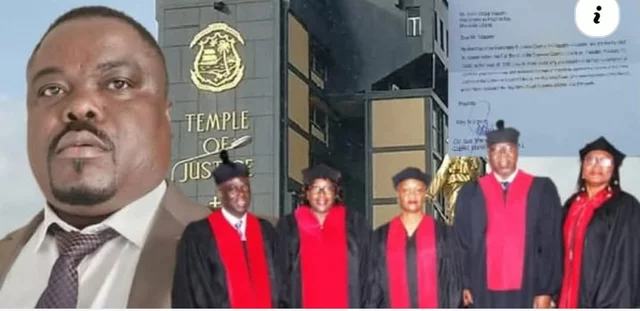
The Supreme Court of Liberia has announced the adjudication and final judgment of sixty-three cases during its October 2025 Term. Among the most notable actions was a high-profile contempt proceeding involving a Nimba County resident accused of launching repeated verbal attacks against the nation’s highest judicial body.
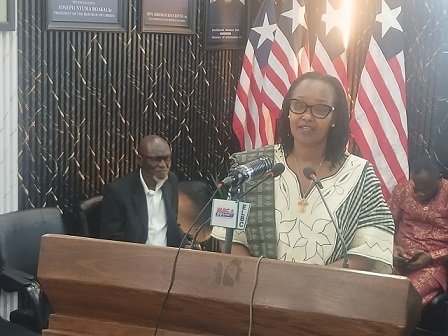
During the delivery of the Court’s disclosure, Chief Justice Yamie Quiqui Gbeisay noted that the Bench handled a diverse array of constitutional, criminal, and civil matters. These proceedings culminated in several pivotal rulings aimed at clarifying the country’s legal and constitutional framework.
A primary highlight of the term was a landmark opinion issued on February 13, 2026. In this decision, the Court interpreted Article 15(a) of the 1986 Constitution of Liberia in conjunction with Articles 5 and 14 to define the specific scope and limitations of freedom of expression. The Court ruled that while freedom of expression is a constitutionally protected right, it is not absolute and carries the requirement of responsible exercise.
Article 15(a) explicitly grants the right to free speech but holds individuals “fully responsible for the abuse thereof.” The Court explained that this provision is intended to foster constructive public discourse and the democratic exchange of ideas. However, the justices emphasized that the use of vulgar, profane, or abusive language—particularly directed at individuals on social media—constitutes a clear abuse of that right. The ruling clarified that constitutional protections for speech do not provide a license for personal attacks or degrading language.
Furthermore, the Court referenced Article 5(b), which mandates the Republic to preserve positive Liberian cultural values, and Article 14, which protects freedom of thought and religion while allowing for limitations necessary to safeguard public order, morals, and the rights of others. Chief Justice Gbeisay remarked that public profanity undermines these principles and fails to reflect the values of Liberian society.
The Court maintained that citizens possess the right to criticize public officials, including members of the judiciary, provided such criticism is evidence-based and presented responsibly. Individuals alleging corruption or misconduct against a justice are encouraged to present their evidence to the Liberian Legislature, which holds the constitutional authority to initiate impeachment proceedings.
The Bench reaffirmed its authority to punish acts of contempt to protect judicial integrity and the rule of law. This authority was exercised in the case of Justin Opa Yeazean, a resident of Ziah Town, Nimba County. The Court found that Yeazean’s repeated social media attacks against the Supreme Court Bench were unsubstantiated and intended to bring the judiciary into disrepute.
Although Yeazean pleaded for mercy during his due process hearing, the Court adjudged him guilty of contempt. Exercising leniency, the Bench imposed a six-month conditional imprisonment sentence. Following his release, Yeazean must publish a formal apology to the Court and the Liberian people in three major newspapers for five consecutive days and file a behavior bond committing to refrain from using profane language in the future.
Chief Justice Gbeisay underscored that the power to punish contempt is a centuries-old principle essential to the justice system. He warned that any erosion of respect for judicial institutions threatens the rule of law and democratic governance. Observing that Liberia has recently been perceived by some as lacking order within the sub-region, the Chief Justice called for increased civility in public discourse.
In closing, Chief Justice Gbeisay urged the Executive and Legislative branches to adopt disciplinary measures against public officials who use vulgar language. He stressed that no official, regardless of status, enjoys immunity to use abusive language against fellow citizens, concluding that respectful dialogue is vital to strengthening Liberia’s democratic institutions.ublic officials, including members of the judiciary, provided such criticism is evidence-based and presented responsibly. Individuals alleging corruption or misconduct against a justice are encouraged to present their evidence to the Liberian Legislature, which holds the constitutional authority to initiate impeachment proceedings.
The Bench reaffirmed its authority to punish acts of contempt to protect judicial integrity and the rule of law. This authority was exercised in the case of Justin Opa Yeazean, a resident of Ziah Town, Nimba County. The Court found that Yeazean’s repeated social media attacks against the Supreme Court Bench were unsubstantiated and intended to bring the judiciary into disrepute.
Although Yeazean pleaded for mercy during his due process hearing, the Court adjudged him guilty of contempt. Exercising leniency, the Bench imposed a six-month conditional imprisonment sentence. Following his release, Yeazean must publish a formal apology to the Court and the Liberian people in three major newspapers for five consecutive days and file a behavior bond committing to refrain from using profane language in the future.
Chief Justice Gbeisay underscored that the power to punish contempt is a centuries-old principle essential to the justice system. He warned that any erosion of respect for judicial institutions threatens the rule of law and democratic governance. Observing that Liberia has recently been perceived by some as lacking order within the sub-region, the Chief Justice called for increased civility in public discourse.
In closing, Chief Justice Gbeisay urged the Executive and Legislative branches to adopt disciplinary measures against public officials who use vulgar language. He stressed that no official, regardless of status, enjoys immunity to use abusive language against fellow citizens, concluding that respectful dialogue is vital to strengthening Liberia’s democratic institutions.