With D. Moses Wantu
Understanding The Chinese’s Culture And Tradition
We are publishing these materials because we strongly believe China has succeeded in nearly every aspect of life. We need to take cue from the Chinese’s Dream. One of the ways we can copy the concept of Chinese culture and traditions through a symposiums is to cultivate workable ideas that will give us a new beginning. Liberia as the oldest African nation does not have a common identity, which is very sad. Let us begin to cultivate the sense of developing a culture that will teach our kids and give them a sense of belonging.
It is unfortunate to note that Liberia claim to have the Ministry of Information Cultural Affairs and Tourism (MICAT), but two revenue generating components of that Ministry is practically dead, and that is the cultural aspect and the tourism components. In view of the above, it is appropriate to detach the Cultural component as well from the Ministry of Information. Let us learn from China.
China is one of the Four Ancient Civilizations (alongside Babylon, India and Egypt), according to Chinese scholar Liang Qichao (1900). It boasts a vast and varied geographic expanse, 3,600 years of written history, as well as a rich and profound culture. Chinese culture is diverse and unique, yet harmoniously blended — an invaluable asset to the world.
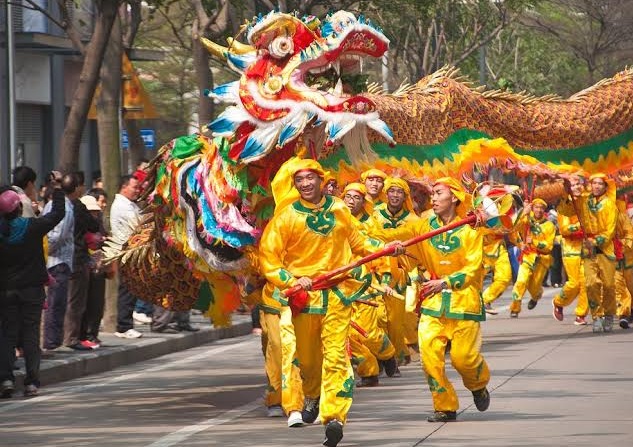
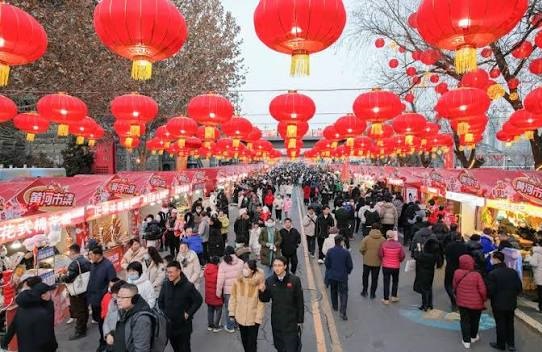
Chinese culture guide contains information divided into Traditions, Heritage, Arts, Festivals, Language, and Symbols. Topics include Chinese food, World Heritage sites, China's Spring Festival, Kungfu, and Beijing opera.
China has several traditional festivals that are celebrated all over the country (in different ways). The most important is Chinese New Year, then Mid-Autumn Festival. China, with its "55 Ethnic Minorities", also has many ethnic festivals. From Tibet to Manchuria to China's tropical south, different tribes celebrate their new year, harvest, and other things, in various ways.
Chinese New Year, also known as Lunar New Year or Spring Festival, is the most important festival in China and a major event in some other East Asian countries.
Chinese New Year is the festival that celebrates the beginning of a new year on the traditional Chinese lunisolar calendar. Chinese New Year 2027 will fall on Saturday, February 6th. The date changes every year but is always somewhere in the period from January 21st to February 20th.
It was traditionally a time to honor deities and ancestors, and it has also become a time to feast and visit family members.
Mid-Autumn Festival, Zhongqiu Jie in Chinese, is also called the Moon cake Festival or the Moon Festival.
As the second most important festival in China after Chinese New Year, Mid-Autumn is an official public holiday. In 2026, the festival falls on September 25th. People living in the Chinese Mainland will enjoy a 1-day public holiday.
In China, the Mid-Autumn Festival is a reunion time for families, a little like Thanksgiving. Chinese people celebrate it by gathering for dinners, worshiping the moon, lighting paper lanterns, eating moon cakes, etc.
It is also celebrated by many other countries, such as America (mainly in the Asian American community), Singapore, and Malaysia. The date is the same as in China, but there is no public holiday.
On the 8th month of the Chinese’s calendar, this is in September or early October on the Gregorian calendar.
In the Chinese mainland, people usually enjoy a three-day break for the Mid-Autumn Festival when it falls near the weekend.
In Hong Kong and Macau, the day after the Mid-Autumn Festival is a public holiday rather than the festival date itself (unless that date falls on a Sunday, then Monday is also a holiday), because many celebration events are held at night.
In Singapore and Malaysia, the Moon cake Festival is not a public holiday officially. If you want to know more details about the date of the Mid-Autumn Festival, click Mid-Autumn Festival 2026
TO BE CONTINUED