–Tech Firms Raise Concerns
By Staff Reporter
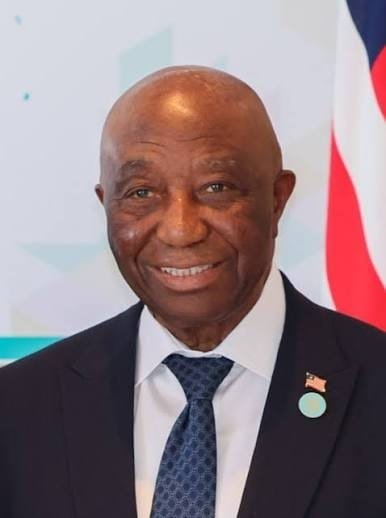
Liberia’s proposed us$52 million concession for a nationwide biometric identification and civil registration system faces mounting questions over national data security, public revenue, procurement transparency, and the future of Liberian technology businesses as president joseph Nyumah Boakai seeks legislative approval for the deal with Austria-based OESD International.
At the center of the controversy is a proposed build-operate-transfer arrangement that would place the development and operation of critical national identification infrastructure in the hands of a foreign concessionaire.
The arrangement raises questions about how much revenue Liberia would retain, who will effectively control citizens’ biometric information, and what opportunities would be left for Liberian technology professionals and businesses.
The proposal, submitted by president Boakai to the legislature on July 15, 2026, seeks ratification of a concession for the national identification central digital civil registry and vital statistics system (NIDCRVS), which the government and OESD signed in April 2026.
The project is estimated at us$52 million, subject to verification, validation, independent audit, and adjustment by the government and relevant oversight institutions.
In October 2026, the Senate referred the proposal to its relevant committees for scrutiny, and the agreement remains under legislative consideration.
For the Liberia Information Technology Consortium (LITCOM), the industry group representing the liberian technology firms raising these concerns, the central question is whether a project of this scale will strengthen the country’s domestic technological capacity or leave liberians dependent on a foreign operator for an essential public service.
LITCOM says its member firms are competent and qualified to submit competing proposals and would do so if the government opens the project to a competitive process.
The proposal also places the government under pressure to explain why this particular concession is necessary, how the supplier was selected, whether credible alternatives were assessed and whether the financial terms adequately protect the public interest.
One of the most consequential issues is how the revenue generated by the system would be shared.
A may 2026 memorandum of understanding (MOU) involving the government of Liberia, OESD International and ECOBANK Liberia provides for a project transitory account into which application fees and designated service fees would be deposited.
Under the MOU, 35 percent of the relevant proceeds, would be allocated to designated government accounts, while 65 percent would go to OESD International.
The same 35-65 split appears in annex 5 of the concession agreement itself. The MOU also allows the company to designate accounts at Eco Bank and at other banks abroad to receive their share.
The proposed arrangement raises a fundamental question: why would a foreign concessionaire receive the larger share of revenue generated by a system that performs a statutory public function and processes sensitive information about the people of Liberia?
The project's development plan contemplates fees for identity verification and queries related to passports, driving licenses, land registration, financial transactions, company incorporation, social protection, and other government services.
OESD’s own financial annex to the agreement projects about us$107 million in fees over 10 years, of which about us$69.5 million would go to the company and about us$37.4 million to the government. among the listed charges is a us$36 fee for each identity check on a bank checking account.
If the 35-65 split applies to these fees as described in the memorandum, the government must explain how the percentages were calculated, what investment and operating costs the company is expected to bear, and what risks justify that split.
The public also needs to know how much the concessionaire expects to recover over the life of the agreement, whether additional charges will apply, how fees will be determined, and what financial obligations liberia will retain after the system is transferred to the state.
The memorandum refers to an initial contractual term of 120 months (10 years), renewable by agreement between the parties. it also provides for daily transfers of the respective revenue shares and monthly reporting and reconciliation. such an arrangement requires independent financial oversight to establish whether collections are complete, allocations are accurate, and the government receives every amount due.
Financial analysts say that, before approving the agreement, lawmakers should determine whether the proposed revenue-sharing formula offers fair value to Liberia and whether alternative arrangements could deliver the same infrastructure at a lower long-term cost.
Beyond the financial terms, the proposed system raises questions about who will ultimately control one of the country's most sensitive public information assets. The NIDCRVS platform is designed to accommodate up to 10 million records, according to the president’s submission to the senate. its planned central registry operations center in Monrovia would receive registration data, verify documents, conduct vetting and biometric duplication and reduplication where necessary, process applications and issue identification cards.
The system is also intended to support identity verification for banking, healthcare, education, pensions, passports, property ownership, business registration and mobile telecommunications.
These functions make the proposed concession a national data-governance issue, not simply an information technology contract.
Biometric identifiers, demographic information and civil registration records could be valuable targets for cyber-criminals or unauthorized users. a breach could expose individuals to identity theft, impersonation, financial fraud and other forms of abuse.
To be clear, nothing in the available documents suggests that a breach has occurred. the concern is whether the proposed legal, contractual, and technical safeguards are sufficient to prevent one and to protect citizens if a security incident occurs.
National security analysts have also called on the government to clarify where the information will be stored, who will have privileged access, who will control the encryption keys, and whether foreign personnel could access identifiable records remotely. they also want to know whether data could be transferred or processed outside Liberia.
According to the tech firms’ review of the signed agreement, it does not specify where the data will be stored or who will hold the encryption keys.
Other opened questions concern independent cyber security audits, access logs, breach-notification requirements, liability for mishandled information, and the remedies available to affected individuals.
These questions carry added weight because Liberia’s personal data protection and privacy act, approved in March 2026, and the cybercrime act, approved in July 2026, now set legal standards for how such data must be handled.
a confidentiality clause in the May 2026 MOU addresses the handling of information concerning Liberian citizens and residents. but confidentiality alone does not establish who legally owns the data, which jurisdiction governs disputes, what technical access a concessionaire will retain, or how accountability will be enforced.
The tech firms argue that Liberia must retain the practical ability to audit, secure, and govern its national identity infrastructure. the government should not become dependent on a private company for access to, or control over, the systems required to administer a core public function.
The proposed concession also raises questions about the government's commitment to local enterprise development and the participation of Liberian technology firms in major public-sector investments.
Many Liberian professionals already work in software development, cyber security, database administration, telecommunications, systems engineering, and digital public administration.
Domestic businesses could potentially contribute to software development, system integration, equipment supply, technical support, cyber security and long-term maintenance.
a project estimated at us$52 million could create opportunities for local companies, engineers, software developers, data administrators and technology entrepreneurs. But those opportunities will depend on the procurement structure, contractual obligations and the extent to which Liberian firms are permitted to participate.