
-Shifting Justifications Expose Gaps In Testimonies
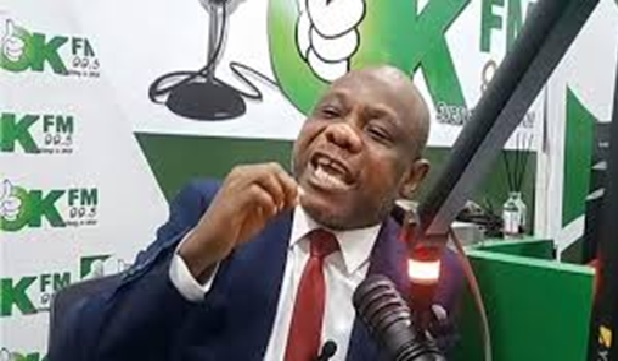
Former Finance and Development Planning Minister, Samuel D. Tweah, Jr., on Monday, April 20, 2026, took the witness stand in Criminal Court “C,” delivering a lengthy and technical defense that was quickly overshadowed by a series of contradictions and inconsistencies that prosecutors say struck the heart of his credibility before the jury.
Tweah, who served from January 2018 to January 2024, is facing charges alongside four former government officials for alleged illegal authorization of more than L$1 billion and US$500,000 in public funds through the Financial Intelligence Agency (FIA).
But instead of clarifying his role, Tweah’s testimony opened new questions about his decision-making, the legality of his actions, and the accuracy of his own explanations.
He attempted to anchor his authority in two main instruments, the Public Financial Management (PFM) Law and the National Budget.
But as Tweah walked the jury through his interpretation of these laws, his version of events repeatedly shifted, raising concerns about whether the former minister was attempting to redefine standard financial procedures to justify questionable transactions.
At one point, the former Finance Minister told the court that agency requests are not necessary for expenditure, insisting that the mere passage of the national budget gives him full power to spend.
Prior to this, Tweah declared that: “The request for resources is the most sufficient trigger for expenditure.”
The conflicting explanations led prosecutors to wonder that Tweah was reconstructing the law to fit his actions, rather than describing the law as written.
One of the most glaring inconsistencies arose when Tweah insisted that emergency -related spending becomes fully legal once the National Security Council (NSC) approves it.
He told the jury: “Once the NSC approves the intervention, the Minister’s authority is complete.”
But the PFM Law is explicit: any spending that exceeds the budget must be reported to the Legislature under Section 26.
The former Finance Minister never said he reported the FIA-related transfers to lawmakers.
Prosecutors seized on his omission, arguing that NSC approval cannot override statutory reporting requirements, and that Tweah’s failure to mention legislative notification is an admission of procedural breach.
Throughout his testimony, Tweah tried to reassure the jury that the controversial “direct debit” mechanism used to move funds to the FIA was perfectly lawful.
He stated: “Direct debit is not outside the budget circle.”
But he contradicted himself immediately by acknowledging: “It is not pre-allotted but may be allotted subsequently.”
This left courtroom observers questioning, if something has no pre-allotment and no documented post-allotment, where exactly does it fall in the budget?
Prosecution then knew that Tweah’s explanation confirms the very point he was attempting to deny that the transfers operated outside the proper budgetary process, at least for a period of time.
When confronted with the absence of written requests or documentation authorizing the FIA transfers, Tweah dismissed these gaps as irrelevant.
He suggested the investigators were too eager to label missing documents as evidence of wrongdoing, comparing it to assuming money is stolen simply because it is no longer visible.
But in public finance a system built on documentation the absence of mandatory paperwork is itself a breach.
Legal minds in the courtroom noted that the former minister’s analogy undermined his own argument and exposed a misunderstanding of the accountability mechanisms within the PFM work.
Tweah’s claim that the Finance Minister has absolute discretion over how, when, and whether funds are released also raised eyebrows. “That discretion rests solely with the Minister,” he told the court.
After his claim, some lawyers immediately noted a flaw, the PFM Law conditions ministerial discretion on compliance with procedures, documentation, and reporting not personal judgment.
By overstating his powers, Tweah unintentionally signaled that he may have acted outside the boundaries of the law, or at minimum, interpreted it more broadly than legally allowed.
Also, Tweah attempted to justify the FIA payments by placing them under the umbrella of “emergency spending.” Yet he used examples such as allocations agencies and ministries of the Government.
His attempt to equate them with the FIA spending created confusion and weakened his credibility.
This contradiction suggested to the prosecution that Tweah was retrofitting unrelated transactions to normalize the FIA payments.
Across nearly two hours on the stand, Tweah’s testimony oscillated between legal interpretation, personal justification, and metaphors that often weakened rather than strengthened his defense.
For jurors listening carefully, the inconsistencies large and small may prove damaging on his part.
During recess hour, one prosecution lawyer was overheard saying "This is a man explaining the law as he wishes it were, not as it is.”
As the trial continues, the question remains: will the jury view Tweah as a seasoned technocrat navigating a crisis, or as an official rewriting procedure to hide unauthorized financial decisions?
Tweah own words may determine the answer.