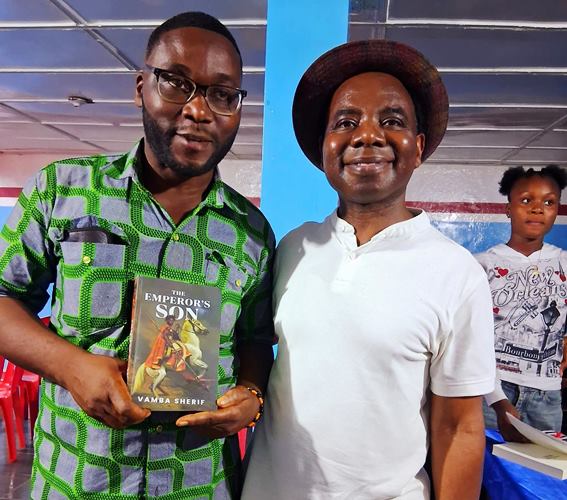
Renowned Liberian writer, Vamba Sherif, officially launched his latest novel,
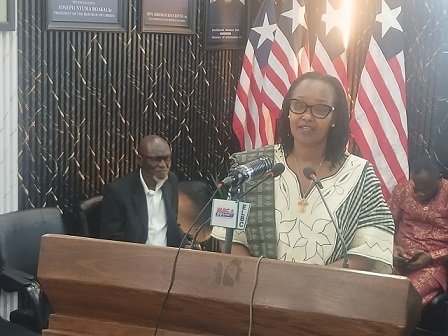
The Emperor’s Son, in Liberia on December 31 at the University of Liberia Auditorium in Monrovia. The event drew a distinguished gathering of prominent and emerging Liberian writers, cultural figures, and senior government officials, marking a symbolic moment in the country’s unfolding literary renaissance.
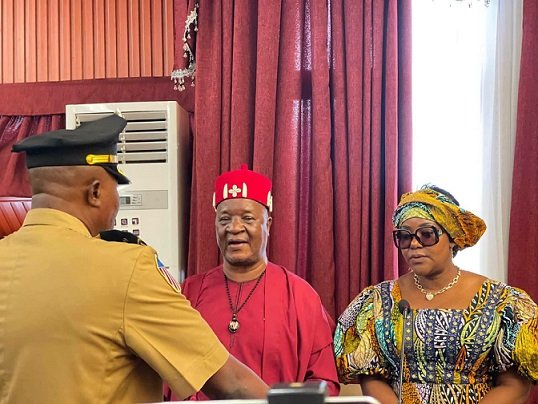
Among those present were Minister of Finance and Development Planning, Augustin Kpehe Ngafuan, National Port Authority Managing Director, Hon Sekou Dukuly, and Minister Without Portfolio, Mamaka Bility. Their joint presence underscored the national significance of Sherif’s return to present his work on Liberian soil. This was the first time Mr. Sheriff has launched any of his literay works in Liberia, having had great success as a novelist in Netherlands, Europe.
Although the novel had earlier been launched internationally in Accra, Ghana, during the Pa Gya Literary Festival in 2024—where it received critical acclaim—the Monrovia event carried deeper emotional and cultural meaning for the author.
“This is my first time presenting a book in Liberia,” Sherif said. “It is a work in which the great Prempeh I, who resisted and fought the English, comes to life together with a cast of other historical characters, including Samori Touré, the emperor of the novel, and Zaiwulo, an adopted son of the great warrior, Samory Toure.”
Before the official launch, Sherif facilitated a Youth Literary Workshop for Liberia titled “Writing Destiny.” The workshop brought together young aspiring writers from across Monrovia and focused on creative writing, storytelling, and the role of literature in national healing and identity formation.
Describing the workshop as “a resounding success,” Sherif wrote on his Facebook page that he had the opportunity to mentor “a group of very talented young men and women.”
“I was amazed by their commitment to their craft and their desire to learn,” he said. “By listening to them and reading their work, I came to believe that the future of Liberia is bright—but the flame needs constant support and encouragement to keep burning.”
The Emperor’s Son has already received wide praise for its powerful anti-colonial vision and its sensitive portrayal of resistance, identity, and human dignity. Critics have lauded the novel for blending historical depth with emotional storytelling, presenting African history through African voices rather than colonial narratives.
Described as “a definitive work of African fiction,” the novel explores the clash between tradition and modernity, the complexities of power, and the enduring human search for belonging. Set in nineteenth-century West Africa, the narrative interweaves the lives of legendary resistance figures such as Samori Touré and Prempeh I with fictional characters, producing a tapestry of grandeur, tragedy, and resilience in the face of European colonial expansion.
Sherif’s prose is richly textured and lyrical, evoking both the splendor and vulnerability of pre-colonial African societies. His characters are not merely historical symbols but living human beings—caught between destiny and doubt, loyalty and survival. The novel succeeds as both epic saga and intimate coming-of-age story, offering readers an emotionally grounded vision of African resistance.
As Liberia continues to rise from the scars of its brutal civil wars, its literary culture is experiencing a quiet but determined rebirth. Writers are reclaiming history, memory, and voices. Sherif stands among the leading figures of this new movement, shaping narratives that reconnect Liberians with their past while imagining a more confident cultural future.
Through The Emperor’s Son, Sherif contributes not only to African historical fiction but also to Liberia’s ongoing project of healing and self-definition. His return to Monrovia to launch the novel represents more than a literary event—it affirms the enduring power of literature to inspire, educate, and rebuild a nation still shaking off the duss of wars.