By Nvasekie N. Konneh
Culture is our way of life and it’s about all aspects of our life. The language we speak, the food we eat, the clothes we wear, or even the way we build our houses are all part of our culture. People everywhere are defined by their culture. All of these put together defines our cultural heritage as people and nations. Having cultural heritage is one thing but preserving such cultural heritage is a great responsibility from one generation to another. What did we inherit from our forebears and what are we transferring to succeeding generation? Questions such as these are very important in understanding cultural heritage and preservation. To put it another way, there can be no people and nation without culture, though some may lose their cultural values in attempting to adopt to cultures which may not be theirs. As Africans, as Liberians, our culture has been under assault since the days we came in contact with foreign cultures through slavery and colonization. In many places today, we struggle to preserve our culture against foreign influence. That’s why the idea of cultural preservation comes in.
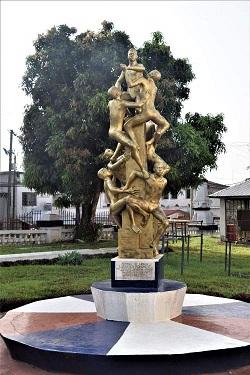
Cultural preservation is the efforts we make to “protect, maintain, and sustain our cultural heritage.” In talking about cultural heritage, let’s look at the three important aspects: Tangible, intangible and natural. Tangible cultural heritage include physical structures or objects such as historical monuments, artworks, manuscripts, and archeological artifacts. Examples of tangible cultural heritage are monuments such as the JJ Roberts statue up the hill next to the Ducor Hotel. Ducor hotel itself is an example of a tangible cultural heritage site due to its historical significance, It was such a beautiful landmark back in the days. It hosted presidents, prime ministers, foreign dignitaries, and the rich and famous. Though I did not spend a night at the Ducor Hotel, I remember meeting some musical icons such as Burning Spear, Fela Kuti, Yellow Man and many other great international artists during the Reggae Sunsplash in 1988. That was one of the first time the Reggae Sunsplash came to Africa and Ducor was part of the history because it hosted some of the biggest international reggae artists.
Other examples of tangible cultural heritage sites in Liberia include President William VS Tubman stature on Broad and Randall streets. There is also the Executive Pavillion or our National Museum on Broad Street. Another example is the OAU monument in Sanniquellie, Nimba County. At the time when our government is making serious efforts in promoting tourism as part of our economic drivers, these tangible heritage sites are very important. When tourists are visiting our country, these are the places they would to like visit, learn and know more about our country and its past. To make tourists to leave with great impression and appreciation for visiting our country, we must have tour guides to explain the history behind these tangible heritage sites. In addition to having tour guides, we must have brochures with historical inscriptions of these tangible cultural heritage sites.
There is also intangible cultural heritage which include our oral tradition, our languages, performing arts, social practices, and traditional craftsmanship. Language is the main important component of our cultural heritage. Before we are taught to write, we speak our languages. While some languages are written, others are oral only. Mastering the language either literarily or orally is very important. Through it we are able to transmit simple and complex ideas from generation to generation. Our languages as parts of the intangible cultural heritage and they are the vehicles through which we can transmit idea and knowledge about our past and present as we move on to the future.
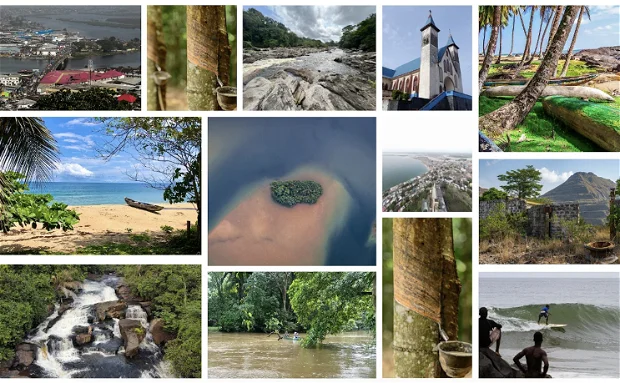
The third category of our cultural heritage is natural heritage sites which include culturally significant landscapes and biodiversity that form part of our group identity. Examples of these include Kpatawee Waterfall in Bong County, Sapo National Forest in Sinoe County, and Lake Piso in Grand Cape Mount County. These natural heritage sites are great drivers for tourism economy in our country.
Key Strategies in cultural preservation
Digital Documentation: This is done by using 3D scanning, AI, and digital archives to preserve at-risk cultural artifacts. Some examples of this were the famous Timbuctoo manuscripts that were threatened by war in Mali. The manuscripts were either removed or preserved digitally.
Community-Led Initiatives: This is done through empowering the local indigenous communities to manage their own heritage, ensuring preservation is authentic and sustainable through national support.
Education & Advocacy: As a matter of cultural preservation, it is important to integrate cultural heritage into our formal school curricula and promoting public awareness through festivals and museums. While our diverse cultural heritage must be taught in our schools, students must be taken on field trips to these heritage sites.
Legal Frameworks is utilized through laws and international organizations such as the UNESCO conventions to prevent the illicit trafficking of cultural properties.
Contemporary Challenges
There are many challenges to cultural preservation in our contemporary world. These include Climate Change. Environmental factors such as rising sea levels and wildfires can cause rapid deterioration of cultural heritage sites.
Armed Conflict is another threat to our efforts at cultural preservation. During wars, the warring groups out of ignorance may carry on deliberate destruction of heritage sites. Such threat manifested itself in the war in Mali where the ancient manuscripts are kept in the library in Timbuctoo. Such conflict remains a critical threat our human memories.
Globalization which is the spread of dominant cultures can lead to the erosion of local customs. Nowhere is this felt more than in Africa. In many of our communities, children no longer have pride in their mother tongues. We see foreign languages as marks of civilization while reducing our own languages to sub categories. Because we all want to look western, we look negatively on our own culture, our languages and our names.
In the name of gentrification, or urban renewal, we undertake projects that demolish original structure in our neighborhoods to build factories, or high-end luxurious apartment complexes.
About the Author
Nvasekie Konneh is a writer and author of three books, “Going to War for America (a collection of poems), The Land of My Father’s Birth,” memoir of the Liberian civil war, and “The Love of Liberty Brought Us Together,” a collection of poems and essays. Nvasekie is a contributing writer to the on-line Liberian literary magazine. He also contributes articles on African arts, cultures, and politics to several newspapers in Liberia as well as in the US, including Black Star News in New York City as well as the Philadelphia Inquirer. In 2014, he produced two parts documentaries on ethnic and cultural diversity in Liberia which has had rave reviews on YouTube as well as on local television stations in Liberia. Nvasekie Konneh holds BA degree in Comparative Literatures with emphases on African, African American and Caribbean literatures from the Union Institute & University in Cincinnati, Ohio. He holds a Master’s Degree in Communication and Media Studies from the West Chester University in West Chester, Pennsylvania. He can be reached at nvaskon1@gmail.com or Knvasekie@yahoo.com.