--Former Road Fund Boss, Satu
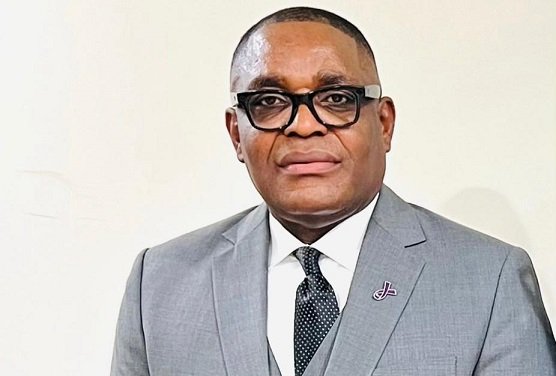
Liberia’s former Road Fund Executive Director, Boniface D Satu, has revealed that the recent African Development Bank’s report on Liberia's economy has provided tangible solutions that could be used by economists to move the Country forward
Mr. Satu told journalists that the AFDB’s 2026 Country Focus Report should not simply be read as another assessment of Liberia’s economy, but should be understood as a blueprint for the country’s next phase of development.
Satu said while much of the public discussion has focused on the report’s positive macroeconomic indicators, its most significant message is that Liberia has entered a new stage of economic policymaking but noted the challenge is no longer simply restoring stability. The challenge is financing transformation.
"The report acknowledges that Liberia has made measurable progress. Real GDP growth increased from 4.0 percent in 2024 to 4.6 percent in 2025. Inflation declined from 8.2 percent to approximately 6 percent. Fiscal discipline improved, and the budget deficit narrowed considerably. These are important achievements that deserve recognition because no country can build sustainable prosperity without macroeconomic stability".
Yet, according to him, the report immediately presents a more difficult reality. Liberia requires approximately US$2.83 billion every year through 2030 to finance the infrastructure, agriculture, energy, education, healthcare, housing, and productive sectors necessary to achieve long-term economic transformation. That finding fundamentally changes the national conversation.
"The question is no longer whether Liberia needs development financing. The African Development Bank has already answered that question. The real question is who will provide the long-term capital required to finance Liberia’s productive economy".
He pointed out that the government budgets, alone cannot bridge a financing gap of that magnitude. Foreign aid cannot permanently finance national development.
Foreign direct investment, according to him, will remain important, but no successful economy has transformed itself by depending exclusively on external capital. Sustainable economic transformation requires strong domestic financial institutions capable of financing domestic enterprise. This is where Liberia’s development strategy remains incomplete.
Satu further noted that the World Bank’s Transport Spatial Analysis identified strategic transport infrastructure as one of Liberia’s highest-return investments because roads connect farmers to markets, reduce transportation costs, improve regional trade, strengthen supply chains, and stimulate private-sector growth. The African Development Bank has identified the financing challenge. The World Bank has identified strategic investment priorities. The missing link is Liberia’s development finance institutions.
"For too long, Liberia has relied almost exclusively on commercial banking to perform functions that commercial banks were never designed to undertake", Satu said.
The former Road Found Executive Director also indicated that Commercial banks play an indispensable role in safeguarding deposits, financing commerce, supporting trade, and maintaining financial stability. Their lending model naturally emphasizes liquidity, collateral, shorter repayment periods, and prudent risk management.
He said economic transformation requires something fundamentally different.
Agriculture, Satu also stated, requires financing over planting and production cycles that often extend well beyond the repayment periods preferred by commercial banks.
The former Road Fund Chief Executive noted that housing finance requires long-term mortgages, agro-processing, manufacturing, rural cooperatives, irrigation systems, warehouse facilities, and industrial development, all require patient capital capable of supporting investments whose returns are realized over many years.