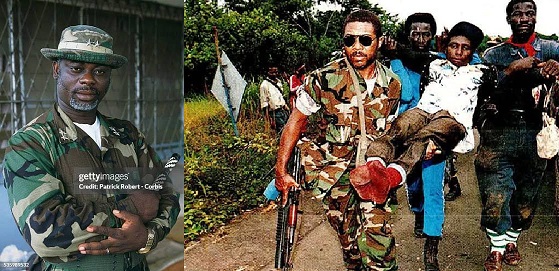
-The Day Monrovia Turned Chaotic
-By D. Moses Wantu
Today, April 6, marks 29 years of a flashback of the chaos that engulfed Monrovia. Over three thousand may have died, almost half the population of the City of over eight hundred and fifty thousand inhabitants were uprooted from their homes into displaced camps and thousands of foreign nationals evacuated to safety as the chaos escalated, breaking down law and order in the City.
The banditry continued until West African peace-keepers regained control and restored law and order.
The bloody crisis was an extension of the civil crisis that broke out in 1989, killing approximately over two hundred and fifty thousand people.
April 6, 1996, was the day Monrovia stood still with chaos and deep rooted brutality which came at the time Liberians were cleaning the debris and healing the wounds of the civil war that erupted in 1989.
The unrest started nearly after seven years of a devastating civil war that wantonly destroyed lives and properties.
Like the civil crisis that broke out in 1989, the horrible scenes of the April 6 Monrovia street battle, have left indelible imprints on the minds of everyone, who witnessed, heard or read about it.
Today, as we soberly reflect on the spoils of the crisis, others may still be wondering as to what must have ignited the April 6 Monrovia war that was so devastating and chaotic to an extent that it remains unforgettable.
It all started when of the fateful day of April 6, 1996, when the interim government of Prof. Wilton Sankanwolo issued an arrest order for Gen. Roosevelt Johnson of the United Liberation Movement, ULIMO-J warring faction on allegation of murder.
The interim administration’s arrest order for Johnson came at a time the warring factions were still armed and when Johnson resisted arrest, he and his men retreated to their stronghold on Camp Johnson Road in central Monrovia, triggering the unrest when Sankanwolo insisted that he be arrested for allegedly killing an unarmed Libeian.
The interim government was made up of representatives of all the armed factions; including Roosevelt Johnson’s ULIMO-J, Alhaji Kromah’s ULIMO-K, and Charles Taylor’s National Patriotic Front of Liberia ( NPFL), while Prof. Sankanwolo headed the Council.
The 6th April Monrovia insurgence erupted as Major General Mark Inienger, who headed the ECOMOG peace-keeping forces as commander from December 1993 to August 1996, had turned over to Major General Victor Malu in August that year.
The Monrovia fighting had undermined the Abuja peace process that began in August 1995. That resulted into the signing of the Abuja peace accord that called for a cease-fire, disarmament, demobilization, reintegration, and the holding of national elections.
Among factions that signed the accord were the National Patriotic Front of Liberia (NPFL); two ethnic wings--Krahn and Mandingo--of the United Liberation Movement for Democracy in Liberia (ULIMO); and a coalition of anti-NPFL forces composed of the Liberian Peace Council (LPC), the Lofa Defense Force, and a breakaway-NPFL group called the Central Revolution Council (CRC).
The second Abuja Accord contained provisions for sanctions--such as travel restrictions, exclusion from elections, and establishment of a war crimes tribunal--for factions not complying with the peace agreement.
Although Monrovia was relatively calm, the factions continued to wage war in the countryside beyond the scheduled cease-fire date of August 20.
During that time, the Armed Forces of Liberia, AFL, remained largely inactive as many AFL Krahn soldiers, joined Krahn LPC troops in April and May to fight against the NPFL and ULIMO-Mandingo forces in Monrovia. There was a small corps of non-factionalized AFL soldiers, who remained neutral in the April-May events and stayed, unarmed, in the Barclay Training Center.
Unfortunately, the ECOMOG forces did not get directly involved with the April 6, 1996 armed crisis apparently because they were not ordered by their high command.
Meanwhile, as the crisis raged on that year, accusing fingers were pointed at the peace keepers on allegations of arming the rival forces against Johnson and his ULIMO-J, allegations that the ECOMOG authorities rebuffed at the time.