-Speak On Lasting Impact Of FGM
For some Liberian girls and women, Female Genital Mutilation (FGM) is not simply a practice from childhood that can be forgotten.
For some survivors, the experience continues to affect how they see themselves, their relationships and the choices they want to make for their daughters and younger relatives.
At 15, Mariam Diakite is focused on her education and dreams of becoming a nurse, but she says an experience from her childhood continues to affect her emotionally.
Mariam, who came from Guinea County to live with her grandmother at the age of seven, said she underwent FGM when she was younger.
She described the experience as something she regrets but said she had no control over what happened to her.
“Sometimes I still think about it, and it is not easy for me,” Mariam said in an interview.
Despite her experience, Mariam continues to attend school and is currently in Grade Eight at T5 Institution in Neezoe Community.
She said she wants to become a nurse and use her future career to help other people.
Mariam’s experience reflects concerns about girls being subjected to practices before they are old enough to understand or participate in decisions affecting their bodies.
She hopes other girls can grow up with the opportunity to remain in school, pursue their dreams and have greater control over decisions affecting their lives.
At 22, Matene Sanoh Says She Regrets FGM
For 22-year-old Matene Sanoh, the memory of undergoing FGM has also remained with her.
Sanoh, who has one daughter, said she was very young when she underwent FGM and did not have the understanding or ability to make the decision for herself.
According to Sanoh, FGM was practiced in her family and passed down from one generation to another.
She said that if she had known more about the practice at the time, she would have made a different choice.
Sanoh said she does not blame her parents because, at the time, they were following a practice that had been passed down through generations and may not have understood its consequences.
However, she said the experience has had a lasting impact on her life.
Sanoh said she has lost three relationships before reaching the age of 22 because of issues she connects to FGM.
She described FGM as a difficult subject that is often not openly discussed, particularly in relationships.
According to Sanoh, she encountered situations where men preferred women who had not undergone FGM, which she said made her feel rejected and contributed to the breakdown of relationships.
The experience, she said, continues to trouble her.
Despite her own experience, Sanoh said she does not want her daughter or younger sisters to undergo FGM.
She said increased education and awareness have helped her understand the practice differently and recognize why she would not want other girls in her family to experience what she experienced.
“If I had my own will, I would have changed the story,” Sanoh said.
For her, the experience has become a reason to speak against FGM and protect younger girls in her family from going through an experience they may later regret.
An Experience Passed Down Through Generations
For Fatumata Kaba, now in her 70s, FGM was once regarded in her community as a normal part of growing up.
Kaba, who experienced FGM in Liberia when she was young, recalled that girls who had not undergone the practice were treated differently.
She said women who had not undergone FGM could even be considered as men rather than women.
Looking back, Kaba said that if she had known what she knows today, she would not have gone through FGM.
She said her children and grandchildren have not undergone the practice and that she would not allow any member of her family to experience it.
Kaba is now speaking against FGM, telling families who continue the practice that there is no benefit to it and that there are things about the experience that girls may not be told beforehand.
‘I Am Grateful I Escaped’
Matenneh Dolley, 35, said she is grateful that she escaped FGM when she was younger and would never allow her three-year-old daughter to undergo the practice.
Dolley recalled that in 2005, when she was young, her older sister, who was a practitioner, wanted to take her to the Sande bush school.
She said her sister presented the experience as something normal and acceptable, and because of this, she was initially excited about joining.
However, someone advised her not to undergo FGM.
Dolley said that when her sister and some of her friends later came to the house to take her, she escaped.
She also recalled that her mother had spoken to her about FGM and told her there was nothing special about the practice.
According to Dolley, her mother also told her there were many things about FGM that she could not explain to her.
Years later, Dolley said she is happy that she did not undergo FGM.
She said she would never allow her daughter to experience the same thing and would not encourage any other girl to undergo FGM.
‘It Is Not Something Our Family Has Done to Us’
Mama Kromah, a student at T5 Academy, said she has never undergone Female Genital Mutilation (FGM) and that no one in her immediate family has subjected her to the practice.
Kromah said she knows that her mother underwent FGM, but she and her older sisters have never experienced it.
“It is not something our family has done to us,” she said, explaining that while the practice may have been considered in the past, it was never carried out on her or her sisters.
According to Kromah, increased awareness about the dangers of FGM has also influenced how young people view the practice.
She said that if someone approached her today and asked her to undergo FGM, she would refuse.
Kromah said her main focus is completing her education and graduating from high school rather than becoming involved in harmful traditional practices that could affect her future.
She said she has heard about FGM and understands that it is not something good for girls.
For Kromah, education and awareness have given her the confidence to make her own decision about whether she would undergo the practice.
Parents Who Reject the Practice
Jestina Jacob, a parent in her 50s, said she has never undergone FGM and would not encourage anyone to go through the practice.
Although Jacob said she does not know much about FGM personally, she said she has spoken with women who have undergone it and listened to them describe their experiences.
According to Jacob, some of the women she spoke with found it difficult to fully discuss what they experienced.
Based on what she has heard, Jacob considers FGM a harmful practice that should not be encouraged or continued.
As a parent, she said her children have not undergone FGM and that she would not encourage anyone else to undergo it.
FGM and Its Health Consequences
The concerns raised by the women and girls interviewed are consistent with international health evidence.
UNFPA reports that 230 million girls and women worldwide have undergone FGM and are living with its physical, psychological and sexual health impacts.
UNFPA also estimates that about 4.5 million girls are at risk of undergoing FGM in 2026 alone.
FGM has no health benefits and can result in immediate and long-term health complications.
Seeking the Ministry of Health’s Perspective
As part of this investigation, we reached out to the Press Bureau of the Ministry of Health to provide medical information on the health effects of Female Genital Mutilation (FGM).
A formal letter was sent to the Ministry requesting relevant information and a medical perspective on the issue.
However, as of the date of publication, the Ministry of Health had not responded to the request.
The investigation therefore relies on testimonies from survivors and community members, information provided by government institutions, and findings from international organizations on the health and social consequences of FGM.
Liberia’s Traditional Response
On February 6, 2023, Liberia’s National Council of Chiefs and Elders proclaimed a ban on FGM.
By February 2024, the ban had been enforced through traditional ceremonies in Montserrado, Grand Cape Mount, Nimba and Bong, while Lofa was expected to become the fifth county to enforce the ban.
More than 800 former FGM practitioners had also received support to develop alternative livelihoods.
UN Women has promoted “initiation without mutilation” as an alternative that seeks to preserve positive cultural practices while ending FGM.
From Bush School to Alternative Livelihoods
According to information from the Ministry of Gender, Social Protection and Social Welfare, the Sonkay Town Vocational and Heritage Center represents part of Liberia’s effort to move communities away from harmful practices.
The center was formerly a “bush school” where FGM was conducted.
It has since been transformed into a center focused on alternative livelihoods, education and the preservation of positive cultural heritage.
The initiative, through collaboration involving the European Union and the UN Spotlight Initiative, seeks to empower former practitioners and young women through vocational training, agricultural resources and business skills.
The approach is intended to address some of the economic factors that can contribute to the continuation of FGM by providing alternative sources of livelihood.
According to the Ministry, a visit to the center brought together government officials from key ministries and agencies, representatives of civil society organizations and international partners.
The main objective was to assess the progress made at the center and determine the next steps for improving it.
Government Seeks Community Engagement
The Ministry of Internal Affairs, through the Department of Culture and Customs, is preparing a nationwide engagement campaign aimed at addressing traditional practices and harmful customs, including FGM.
Assistant Minister for Culture and Customs William Jallah said the government’s approach will focus on engaging traditional practitioners and local leaders across the 11 counties where FGM has been practiced, rather than relying only on legislation.
“Passing the law does not solve it,” Jallah said. “If you don’t engage the people, passing a law will not change anything. That is why we believe the engagement process is the best approach.”
Jallah said Liberia’s traditional institutions, including Sande and Poro societies, can continue while harmful practices are removed.
“Culture is a way of life—it is a belief, a tradition, and a norm,” he said. “You can practice Sande without FGM.”
He said these societies can continue to serve as institutions of discipline and learning while practices that violate human rights or cause harm are stopped.
Jallah also emphasized the importance of preventing forced initiation and respecting the age and consent of children.
He advocated for traditional activities to be organized in a way that does not prevent young people from attending formal school.
Preserving Culture Without Mutilation
The government’s position raises an important question in the national discussion: how can Liberia preserve positive cultural traditions while eliminating practices that harm girls and women?
UN Women has previously promoted “initiation without mutilation” as an approach that allows positive cultural practices to continue while ending FGM.
For communities where FGM has historically been connected to initiation, this distinction may be important.
It means that ending FGM does not necessarily require communities to abandon their entire cultural identity.
Instead, government officials and partners are seeking ways to separate cultural education and traditional values from the physical harm associated with FGM.
Breaking the Silence
For years, many girls and women have had limited opportunities to openly discuss their experiences with FGM.
The women and girls interviewed for this investigation described different experiences, but several shared a common element: they said they did not make the decision for themselves.
Mariam was a child.
Sanoh was young and said she did not understand the decision.
Kaba grew up in a period when FGM was treated as an expected part of womanhood.
Dolley escaped before the procedure could take place.
Kromah says her mother underwent FGM, but she and her sisters have not.
Jacob, as a parent, has chosen not to allow her children to undergo it.
Their stories demonstrate the importance of giving girls information, protection and the ability to participate in decisions affecting their bodies.
As Liberia continues its efforts to eliminate FGM, the challenge will be to ensure that commitments made by traditional leaders and government institutions translate into protection for girls in communities where the practice has historically been accepted.
For survivors, the change may already be beginning with something as simple as being able to tell their stories.
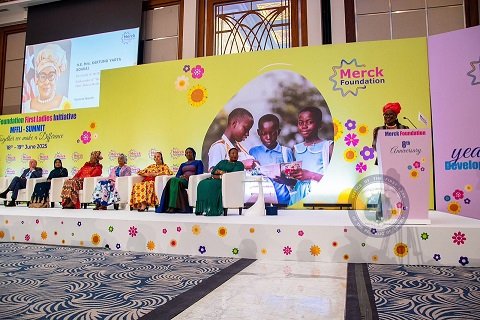
And for girls who have not yet experienced FGM, the hope expressed by those interviewed is that they will have the opportunity to grow up, remain in school and make decisions about their own lives without being subjected to a practice they did not choose. The story is produced in line with the Merck Foundation’s efforts to support the campaign to end FGM and other harmful practices against women and girls, while giving survivors and those at risk an opportunity to speak about their experiences.