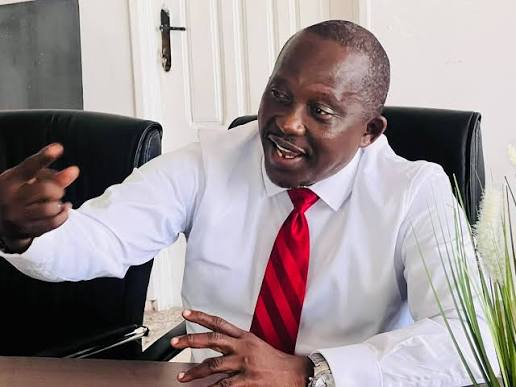
The office for the establishment of the War and Economic Crimes Court, WECC, is facing a lot of setbacks, stalling its operations for the possible establishment of the much publicized Court to end impunity in Liberia.
`The WECC, according to its Executive Director and renowned lawyer, Cllr. Jallah Babu, said, is yet to receive the requisite funding to underwrite the cost of its operations, also adding that even compensations for its skeleton staff is not forthcoming as was expected.
Cllr. Babu further revealed that a draft bill for the creation of the court is still lingering between the Executive and the Legislature with no progress in sight.
Local stakeholders have challenged President, Joseph Boakai to live up to his commitment to justice and human rights by giving the WECC office the logistical and financial support it needs for the creation of the court.
Among local and international groups reminding the Liberian Government of its commitment are Advocates for Human Rights, Civitas Maxima, Civil Society Human Rights Advocacy Platform of Liberia, Global Justice Center, Global Justice and Research Project, and Human Rights Watch.
“Liberia’s quest to bring to a closure for victims of civil war atrocities and ensure their access to justice remains a major priority,” said human rights activist, Adama Dempster, secretary-general of the Civil Society Human Rights Platform of Liberia.
“We call for government and international support to ensure the establishment of the court.” Dempster further said.
The group said widespread and systematic violations of international human rights and humanitarian law characterized Liberia’s two brutal armed conflicts that occurred between 1989 and 2003.
They conflicts were characterized by summary executions, massacres, rape and other forms of sexual violence, mutilation, a torture, forced conscription and the use of child combatants.
Except for those prosecuted or being prosecuted abroad, none of those bearing greater responsibilities of the crisis has faced criminal investigation or prosecution in Liberia for serious crimes committed during the civil wars.
The country’s Truth and Reconciliation Commission, in its final 2009 report, recommended the creation of an extraordinary criminal court, a hybrid court composed of Liberian and international judges, prosecutors, and other staff with a mandate to try those allegedly responsible for committing serious crimes.
As the groups highlighted in a recent submission to the United Nations Human Rights Council in the context of Liberia’s upcoming November 2025 Universal Periodic Review, 16 years later, Liberia is yet to implement this critical recommendation.
Cllr. Babu, according to political and civil society activists, brought a wealth of experience to the Office for the creation of the War and Economic Crimes Court, having served in numerous capacities. He served as head of the Law Reform Commission, dean of the Louis Arthur Grimes School of Law at the University of Liberia among other notable positions.
They observed that the Government’s seemingly lack of support has the tendency for anyone or group to think that the erudite lawyer is a failure.
The local human rights activists emphasized that while President Boakai has expressed full confidence in the ability of Cllr. Barbu to play the vital role with unwavering dedication, commitment to justice and loyalty to the state, he cannot succeed without the support he needs to do the work