By Aaron Weah
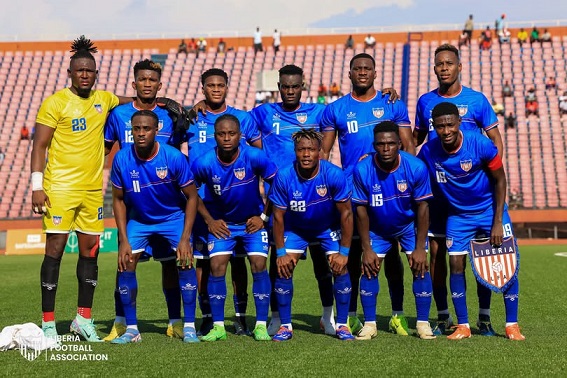
THE NEWS OF THE LIBERIAN FOOTBALL TEAM, the Lonestar, being denied US visa has gone viral. Some are surprised that a whole national team was denied while others are shocked for there’s little domestic precedent. I was denied a visa once and it occurred at the US Embassy in Mamba Point—Monrovia, November 2007. But the decision was later reversed within 48 hours.
I WAS INVITED TO THE UNITED STATES to participate in an all-staff retreat, a tradition of my former employer, the International Centre for Transitional Justice (ICTJ) that brought together staff from across thirty-five countries globally to reflect on the state of transitional justice, design programs and strategic plans for the our respective countries. I showed up for the visa interview few weeks to my scheduled departure. The visa counsellor who interviewed me and I had met a few times before at some human rights workshop. During the interview, he drew upon that history and said, “when you travel to the US, you’ll not return because you’re likely to file for political asylum.” I was in shock and unable to say anything in my defence. The counsellor returned my passport to me, and I left the interview room with a heaviness that was difficult to explain.
I PHONED UP MY BOSSES IN NEW YORK and reported the visa denial and that I will not be attending the retreat. The New York Team, however, refused to accept the denial and decided to pushback. Their response was a nicely worded letter submitted to the Embassy appealing the decision. The letter was persuasive, arguing that I was the only senior Liberian staff in the Liberia Office and that my presence at this all-staff retreat was critical. Then, the Liberia TRC was up, and running and transitional justice was in vogue, not quite like today. The decision was rescinded and the visa was issued!
WHEN I BOARDED THE FLIGHT TO NEW YORK, I was naïve about what to expect. I had my mind fixed on meeting ICTJ’s colleagues especially those whose work I had read but had not met in person. I was new to transitional justice, and the learning curve was long and daunting. There was so much to read and learn. I also wanted to meet colleagues from similar context as Liberia. Of course, like everyone else, I wanted to have the American experience, take in the sites and visit places that I have only seen on TV. I overlooked the social pressure from the Liberian Diaspora, to ‘maximize’ the utility of the US visa. In essence, it meant overstaying your visa in pursuit of the American Dream. Some of my friends called to inquire about my plans; are you staying or returning home? They all wanted to know. Phone calls and emails messages became incessant. Some relatives even volunteered to host me until I was able to settle down. When I appeared noncommittal, some became annoyed and frustrated. The closer I inched towards my departure date, the calls and messages increased. For some, it was unthinkable that I insisted on returning. Five years earlier, Liberia was in the throes of war, violence and destruction was everywhere and nearly everyone was looking for a way out. Here I was with an American visa, the very thing that most Liberians wanted and the access that only few had. Instead of ‘maximizing’ it, I chose to return home. In the eyes of many, it was inconceivable, a decision that some threatened, I will live to regret.
I TOOK THE TRAIN FROM BOSTON TO NEW YORK and flew back home on 1st January 2008. When I return home, a few of my classmates who heard that I’d travelled to the US tracked me down. When we met, I was judged to be a gbelleh, a Liberian parlance that describe anyone who is perceived to manifest signs of low socio-political acumen. Being street smart is also an integral part of this definition. Put together, I was declared a bad example of those ‘entrusted’ with a US visa. The explanation that I love the job I did and wanted to continue in this line of work, and that I had a family amounted to nothing adequate but lean excuses.
ALMOST NINETEEN YEARS SINCE MY FIRST visit to the United States, I have come to question the notion of the America dream and whether it’s applicable to everyone. To friends and families who volunteered to help was doing what most Liberian would do. Some saw in me a kid from the Twelfth Street, the damage wrought by the civil wars and the rare opportunity I had to make something of myself. But the notion of the America Dream doesn’t apply to all situations; neither does it apply to every single individual arriving on the shores of that great nation. Some career objectives can only be fulfilled on the home front and nowhere else. I wish the Lonestar team visa denial is reversed and that they are allowed to honor the friendlies in Minnesota. Even though Liberia is in a much better place than it was in 2007 when I travelled to the US, the social pressure of the Liberian Diaspora that I experienced yesterday, are still present today.