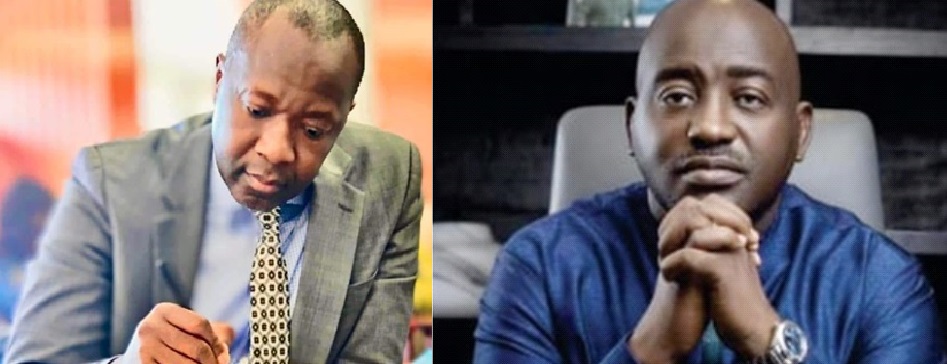
By Hon. Musa Hassan Bility, Representative, District 7, Nimba County
I am deeply concerned by the recent development involving the reported complaint from the leadership of the House of Representatives to the Liberian Senate over comments made by Senator Amara Konneh. Senator Konneh reportedly criticized the decision of the House, describing it as “yet more theater” and saying, “This is not politics, it is madness.” Whether one agrees with Senator Konneh or not, the bigger issue is this: since when did criticizing the decision of a national institution becomes an offense?
When the House of Representatives, the Senate, the Executive, the Judiciary, or any public institution makes a decision, that decision becomes subject to public scrutiny, public debate, and public criticism. No branch of government is above criticism. No public official is above criticism. No national institution is above the voice of the people.
Senator Amara Konneh, whether speaking as a senator or as a citizen of Liberia, has the right to disagree with any decision made by the House of Representatives. That right is not a privilege granted by leadership. It is a constitutional right. The same right belongs to every Liberian, senators, representatives, journalists, students, market women, ordinary citizens, and anyone who believes that public power must answer to the people.
Any attempt to make criticism of a public decision appear like misconduct is dangerous. It is wrong. It is unacceptable. And for the Senate to respond in a way that appears to accommodate such a complaint is even more troubling. That response is weak. It is dangerous. It sends the wrong message at the wrong time.
We must not allow legislative courtesy or institutional respect to become a weapon for silencing dissent. Respect does not mean silence. Respect does not mean fear. Respect does not mean surrender.
The Legislature is not a private club. The House of Representatives is not the personal property of its leadership. The Senate is not a disciplinary chamber for silencing members who speak their minds. These are national institutions created by the Constitution, funded by the Liberian people, and accountable to the citizens.
When those institutions make decisions that affect our democracy, our rule of law, our Constitution, or the rights of our people, those decisions must be open to criticism.
Let me say this clearly to the leadership of the House and to the leadership of the Senate: we will not accept any attempt to use fear, suspension, expulsion, or institutional pressure to curtail the right of any Liberian to speak
.
If Senator Amara Konneh disagrees with a decision, he has the right to say so. If a representative disagrees with a decision, he has the right to say so. If an ordinary citizen disagrees with a decision, that citizen has the right to say so. That is democracy.
Public officials must develop the maturity to understand that criticism is not an insult to the institution. Criticism is part of democratic accountability. The real threat to institutions is not criticism. The real threat is arrogance, abuse of power, intolerance, and the belief that public officials cannot be questioned.
Liberia has suffered too much for anyone to play games with our democracy. We have seen where fear leads. We have seen where silence leads. We have seen where unchecked power leads. That is why we must resist every attempt, whether small or large, to normalize intimidation in public life.
Today, it may be Senator Amara Konneh. Tomorrow, it may be another senator. The next day, it may be a representative. After that, it may be a journalist, a student, a radio caller, or an ordinary citizen in the street. That is how democracy dies, not always by one loud act, but by small, repeated attempts to make people afraid to speak.
For some of us, we will never accept that. As long as we are here, when the House makes a decision that we believe is wrong, we will criticize it. When the Senate makes a decision that we believe is wrong, we will criticize it. When the Executive makes a decision that we believe is wrong, we will criticize it. When any national institution acts in a way that threatens the Constitution, we will speak.
That will not be controlled by threats. That will not be controlled by fear. That will not be controlled by suspension. That will not be controlled by expulsion. Let it be known: if the expectation is that members of the Legislature will now be frightened into silence because leadership disagrees with their criticism, then that expectation will fail. Another member may be intimidated. Not this one. Not Musa Bility.
We were elected to represent the people, not to worship power. We were elected to defend the Constitution, not to protect the feelings of those who occupy offices. We were elected to speak when silence becomes dangerous. I therefore call on the leadership of the House of Representatives to stop treating criticism as an offense. I call on the leadership of the Senate to defend the independence and dignity of its members. And I call on all Liberians to remain vigilant.
Freedom of expression is not negotiable. The right of citizens and public officials to criticize government action must never be compromised. No one, not the House of Representatives, not the Senate, not the President, not the courts, and not any public official, is above scrutiny.
Let us guard this democracy. Let us protect free speech. Let us reject fear. Let us make it clear that Liberia will not return to the politics of intimidation, silence, and creeping dictatorship.