By Stephen Robert’s
At 16, Marian was faced with a decision that could change the direction of her life. Her family wanted her to get married, but she had a different plan.
She wanted to continue her education.
Marian, now 35, said early marriage was a cultural tradition in her family. Many of her siblings and cousins married at a young age, and some were unable to complete high school.
But Marian refused to follow the same path.
She told her family that she wanted to remain in school. She eventually completed high school and later attended a vocational school at National Vocational Training Center (NVTC), where she obtained a certificate in computer studies.
For Marian, refusing marriage at 16 meant protecting the education she had worked for. But she said the decision came with consequences.
She said her family did not provide the support she needed because she had refused to marry at a young age. She believes that if she had received that support, she could have gone further in her education and possibly obtained bachelor’s and master’s degrees by now.
“I could have gotten my bachelor’s and master’s by now,” she said.
Marian is now 35 and unmarried. She said she is ready to marry when the right opportunity comes, but she does not regret refusing to marry when she was 16.
Her decision, however, also affected her relationship with members of her family.
Marian said she previously lived with her brother, but eventually had to leave the home after disagreements related to her decision not to marry. She said she was also accused of being a lesbian because she remained unmarried.
Today, Marian lives on her own and runs a small business selling cold drinks to support herself.
She said life has not been easy, particularly because she feels she has had to build her life without the support she expected from her family.
Marian is now seeking support to expand her small business and continue her education.
She said she would welcome an opportunity to pursue higher education if she could receive the necessary assistance.
For Marian, her story is not simply about remaining unmarried. It is about choosing education at a young age and the difficulties she says followed that decision.
She believes girls should be allowed to make decisions about their education and future without being forced into marriage simply because they have reached a certain age.
Asafi Regrets Leaving School for Marriage
At 36, Asafi says she regrets leaving school and getting married at a young age.
She said she was still going to school when she met the man she later married. The decision to get married, she explained, was not made by her family. It was a decision she made herself.
After getting married, Asafi had a child and was unable to return to school. She eventually dropped out while she was in the sixth grade.
Years later, she says leaving school remains one of her biggest regrets.
Asafi now encourages young people, especially girls, to take their education seriously before entering marriage.
She believes marriage should not prevent young women from building themselves. She encourages girls who may decide to marry to also consider education, vocational training or a business that can help them become independent.
According to Asafi, young women should not feel that they have to rush into marriage because they believe their opportunity to marry will pass.
She says girls have time to marry, but education and skills can help them build a better future.
Her message to young girls is simple: take your education seriously, learn a skill or start something that can help you support yourself rather than depending entirely on marriage.
At 17, She Fears Losing Her Education to Marriage
A 17-year-old girl in the 10th grade says pressure from her family to get married is weighing heavily on her as she tries to complete high school.
The girl, whose identity is being withheld at her request, said her mother, father and siblings have all been putting pressure on her to marry.
She said she wants to complete high school and build a future for herself before getting married. But because her family pays her school fees, she feels she has limited power to resist their decision.
“It is difficult because they are the ones paying my school fees,” she said.
The teenager is the youngest child in a polygamous family. She said all of her older siblings are already married, leaving her as the last unmarried child in the family.
She said the pressure has made her afraid that she could be forced to give up her education before completing high school.
For her, education is not only about receiving a certificate. She wants to reach a point where she can support herself through a job or a skill and not have to depend completely on a husband.
She said she wants to be able to make decisions about her own life and have something to fall back on if her future marriage becomes difficult.
“I want to complete high school and find something better to do,” she said.
She said vocational training or another skill would also give her a way to earn an income and become more independent.
Despite the pressure, the teenager said she still hopes to finish high school before marriage.
For now, she remains caught between her family’s expectations and her own desire to complete her education and build an independent future.
Married at 14, She Returns to School After Giving Birth
A 19-year-old woman, whose identity is being withheld at her request, says she got married at the age of 14 but has now returned to school after giving birth to her first child.
She said she left school when she got married, but her husband later agreed to support her education.
After giving birth to her first child, she returned to school and is now continuing her education.
The young mother said her experience has taught her that marriage should not prevent a girl from getting an education.
She acknowledged that in some families, young girls are encouraged to marry because of cultural expectations or concerns that they may become pregnant outside marriage.
She said that was part of the reason she was married at a young age.
However, she believes that even when a girl is married, she should still be given the opportunity to continue her education.
She is encouraging families not to allow marriage to completely end their daughters’ education.
For her, returning to school after marriage and motherhood has given her another opportunity to pursue her education and build a future for herself.
She said her message to other girls is that marriage or motherhood should not necessarily mean the end of their education.
The world has committed to the target of ending child marriage by 2030 through the adoption of the Sustainable Development Goals,
Because of economic reasons, many parents in Liberia, especially in indigenous settings, encourage their girls to marry at very early age, when they should be going to school. This practice has become a16 National Policy on Girls’ Education norm which is sometimes accepted as a source of support for parents
and their dependents. The gain perspective overshadows the devastating results of exploitation, but that still does not make it right. Girls who marry as children are often more susceptible to the health
risks associated with early sexual initiation and childbearing, including HIV and obstetric fistula. Lacking status and power, these girls are often subjected to domestic violence, sexual abuse, and exploitation. Early marriage almost always deprives girls of their education or meaningful work, which contributes to persistent poverty.
The international community recognizes child marriage as a serious development problem, but growing awareness has not led to committed, coordinated action against this practice.
Excellence Wutoh, a gender equality activist and head of the Initiative for Youth Empowerment and Economic Development (IYEED), said social attitudes toward relationships involving children remain a major concern for girls’ protection and education.
Wutoh said some parents accept relationships between girls and older men because they view the relationship as a source of financial support for the family.
She said this can make it difficult for activists to intervene, particularly when parents do not see the relationship as harmful.
“But when you try to educate them like, ‘This is not relationship; this is rape, because this child is still growing,’ you know, they tend to see it differently,” she said.
Wutoh also shared her own experience of being approached by older men when she was under 18. She said she graduated from high school at 16 and, after being introduced to high-profile meetings by her mentor, began interacting with older professionals who sometimes expressed interest in her.
She said she understood that such relationships were inappropriate, although some of her friends were involved in similar situations.
Wutoh said she has received information about early marriage from people concerned about the practice, but has not received a direct complaint from parents asking her to intervene because their daughter was being forced into marriage.
She said that when rape is involved, however, she considers it a serious matter requiring intervention.
“Rape is a very, very heinous crime,” she said.
Wutoh said early marriage and sexual relationships involving girls can have consequences for their education, health, economic independence and future opportunities.
She said communities need to challenge practices that treat girls as dependents or property and instead give them the opportunity to grow, stay in school and make informed decisions about their lives.
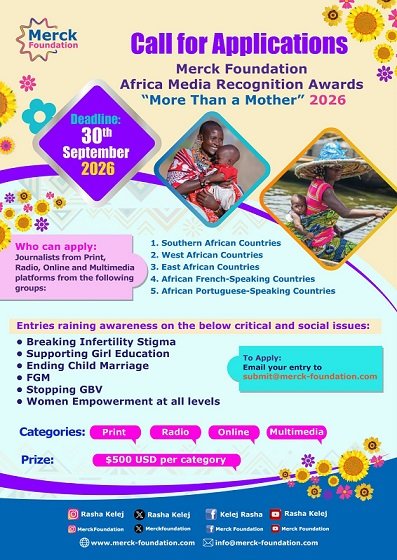
This story is produced in line with the Merck Foundation’s efforts to promote girls’ education and raise awareness about barriers that prevent girls from staying in school, including child marriage. It highlights the experiences of girls affected by early marriage and family responsibilities, while drawing attention to the importance of keeping girls in school and creating opportunities for them to pursue their education and future careers.