-THE EFFECT OF THE POPULAR SLOGAN
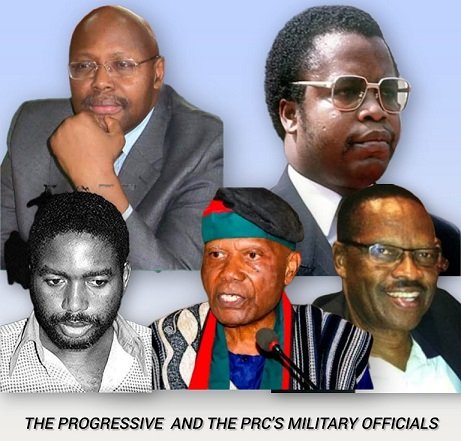
It was a popular slogan in the 80s among the soldiers and the civilian population, “IN THE CAUSE OF THE PEOPLE, THE STRUGGLE CONTINUES” unfortunately, many who chanted it could not actually explain the meaning of this slogan. It was the few politicians, like Dr. Togba Nah Tipoteh, Hon. Gaberiel Barcus Matthews, Dr. Marcus Dane, George S. Bolley, Samuel Jackson, D. Kan Carlo, Dr. Henry B. Fahnbulleh, Jr. and other politicians closed to the soldiers where the ones who might have coined this revolutionary phraseology, so they Would have been the ones that could best interpreted the meaning and its application through policy administration in national leadership. Unfortunately, they could not best apply this phraseology in their leadership role that could positively affect or impact the livelihood of the citizens, even though, after the 1980’s coup, many of the so-called Progressives have received their share of the national pie, (Jobs), appointed positions according to their credentials. The Progressives knew what the phrase or slogan meant, but could not live by it for the citizens to have a real taste of what the revolution was intended for.
Now, this could be the actual meaning, “IN THE CAUSE OF THE PEOPLE (In the ignorance of the citizens), THE STRUGGLE CONTINUES (the suffering goes on, non-stop). This means, the so-called educated Liberians rode on the ignorance of the soldiers and the citizens to milk Liberia, to enrich themselves.
One would think that the “struggle continues” phrase was meant to create a holistic working class that could put the economy at an appreciable level for citizens to feel the impact of the revolutionary change. The citizens, including the Peoples Redemption Council (PRC) soldiers also needed an economy that could afford Liberians the opportunity of transformative life. Yes, the soldiers too needed reform in governance that could have a positive reflection in the livelihood of the citizens, notwithstanding, that was never the case. The soldiers needed rapid progress that could legitimize their struggle for change, but they have not had the expertise, so they depended on the Progressive, but when they noticed their expectation about the national leadership paradigm shift was not coming to effect, Liberians begin to mock and throw insults at the soldiers because life after the coup was getting unbearable as companies begin to scale down work force. Some companies closed perpetually and never to return. People started losing their jobs, the revolution begun to turn against its own celebrants, and the “Struggle Continues” begin to show and demonstrate its actual interpretation. Heads broke loose between the soldiers and the Progressive, as trust and confidence begun delusive and the actual intendent about the revolution according its slogan, “Struggle Continues” has begun taking effect, even up to today’s date, Liberians are still struggling for survival.
Politicians set their eyes on how to use the ignorance of the soldiers and ordinary Liberians to shoot their way to power for personal gains and aggrandizement. unfortunately, the soldiers could not allow it. Since after the coup, no political era has ever brought the much-desired change for Liberians on a larger scale to benefit them. With all the natural resources, hardship have increased in the life of many Liberians. To many thinkers, the slogan of the revolution and the subsequent application of its theory was never in the best interest of the citizens, till now.
Two years later after the coup, revolution had begun to eat its own babies ( Citizens, including the coup masterminds), panic had entered the revolution. The slogan begun to take effect.
When the 133 years of misrule by the Americo-Liberians ended on April 12, 1980 through the military intervention of the Army officers, which resulted to the death of 13 senior government officials and several others, Liberians have never had such violent experience on a larger scale as was the case of the 1980’s incident, so they blindly celebrated and cheered the soldiers. They saw them as their redeemers, not knowing they soldiers and the Progressive were the beginning of the national calamity of today. They have forgotten that Liberia was founded in the year 1822 and later got her independence on July 26, 1847 by American missionaries through negotiation with the locals, not the barrow of the gun, so to change this narrative should not have been the use of violence when we have not had the expertise of state craft.
The struggle and desire for the dethronement of the oligarchy as a one-party state started far back as in 1979, when group of Liberians who have returned from America and other western nations to their motherland from studies to participate in the development of the nation. It is by that time they should have grown themselves in the administration of statecraft in preparation to serve an African nation crying for direction of reform, and not military redemption.
Liberians cried for direction for so many years because they were been treated by the Americo-Liberians settlers, the free slaves who they have welcomed and accepted in the spirit of brotherhood as less human, and decisions that were made did not consider them as a member or part of their human family, yet they were forced to adhere to those decisions on a compulsion note.
Political participation by the indigenous population was illusive and this was a serious hurt on the part of those who had gotten little bid of western education. Before the return of the Progressive, D. Tweh, Albert Port, and others have started raising issue of unfair treatment of the ordinary and indigenous population. It is important to note that political agitation geared towards political participation started during the regime of Edwin J. Barclay.
This struggle for equal participation in governance during Barclay’s regime continued until the coming to power of the William V. S. Tubman’s regime, where politicians were been manhandled by Tubman’s security forces on the instruction of President Tubman. Twan Wreh was thrown behind bar several times by Tubman. Henry B. Fahnbulleh, Sr. a Liberian diplomat assigned to the East African. He was accused by Tubman of treason. Fahnbulleh had earlier served the Republic of Sierra leone.
There came William R. Tolbert, Jr. the longest serving Vice President of Tubman, who later became President, after Tubman died. Coming from religious (Christian) back ground, Tolbert came to the Presidency with a Mindset to enforce the reunification policy of his predecessor. Tolbert did all he could by drawing the enlightened indigenous closer to power. He appointed some of them to high profile positions and offered international scholarship to many young Liberians.
When these guys have returned from studies, they came back home to practice what they have acquired from studies. They came with the mindset to use the same indigenous they claimed to redeem to orchestrate demonstration against the very government that empowered them in demand of reduction in the price of rice, the nation’s stable diet. The government of President Tolbert called for dialogue, but Gabriel Barcus Mathew, Dr. Togba Nah Tipoteh, Marcus Dane, and other rank leaders have refused to listen. Instead, they called for a mass demonstration on April 14, 1979, a year before the April 12, 1980 coup.
The same group calling itself “the progressive” were successful to mesmerized and enthralled the soldiers to use the gun and remove the 133 years of one-party state rule.
it was the same progressive that coined this slogan for the soldiers, which states, “in the cause of the people, the struggle continues”.
We are convinced that these politicians were the ones behind the scene controlling the soldiers, because as illiterate as those soldiers were, they could not have coined for themselves these words as a slogan for the revolution.
After the coup, the soldiers took over the state, formed their government, and promised to return the country to civilian rule in five years period. With the support of the American government, the soldiers successfully ended their five years tenure. Unfortunately, during the five years rule of the People’s Redemption Council (PRC) government, there were claims and counter-claims of attempted coups, which witnessed summary execution of major actors of the April 12, 1980 revolution. Men like Nelson Toe, Thomas Welson, J. Nicolas Podial, and others were murdered in cold blood by Samuel Doe.
TO BE CONTINUED