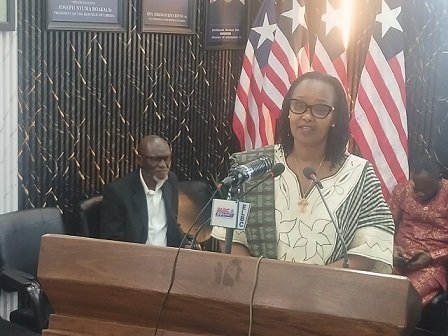
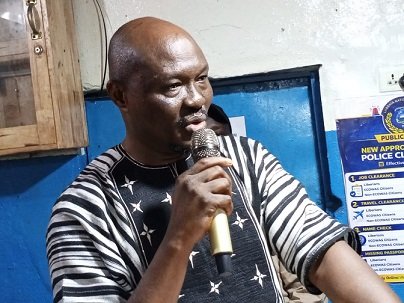
Deputy Public Works Minister, A. Samuka Dunnoh, has outlined several major development projects he said the government is undertaking across Liberia, emphasizing the administration’s commitment to improve road connectivity and accelerate national development.
Mr. Dunnoh, deputy Minister of administration at the Works Ministry, also revealed that the Boakai-Koung administration has earmarked an additional six hundred and seven (607) km roads across the country with alphat pavement for this coming dried season.
Dunnoh said the government’s ongoing infrastructure drive includes major road projects in the southeastern, northern and western regions of Liberia.
Among the projects, according to him, are the Mano River Union Road development and transport facilitation program and the 61.5-kilometer Kelipo–Putuken–John Davis Town corridor.
The project is aimed at improving transportation and strengthening economic opportunities in southeastern Liberia.
Another major project is the John Davis Town–Zwedru Road, a 48.5-kilometer corridor being supported through a program put at the value of approximately US$60 million.
Deputy Minister Dunnoh said the project is expected to further improve road access and connectivity in southeastern Liberia.
In Grand Gedeh County, he further disclosed that the Ministry of Public Works has signed an agreement for the pavement of an 85-kilometer road from the Ivorian border through Toe Town to Zwedru under the Rural Economic Transformation Project II.
The project, Public Works official said is intended to strengthen rural access, agricultural activities, trade and commerce.
In Lofa County, the government has broken ground for the Voinjama–Mendikorma Road Project, covering approximately 86 kilometers, he he said.
The road is part of a larger program targeting 255 kilometers of roads across several counties and is expected to improve cross-border trade and regional connectivity.
The Ministry’s infrastructure program also includes the Japan Freeway Extension Project, linking the Gabriel Tucker Bridge to the Freeport of Monrovia.
Recent developments have paved the way for contractors to proceed with full-scale construction activities along the corridor.
Minister Dunnoh emphasized that the government’s infrastructure development agenda is focused on connecting communities, improving access to markets and essential services, and creating opportunities for economic growth across the country.
The Public Works Ministry has continued to place road construction and rehabilitation at the center of the government’s development programme, with several projects now under implementation or preparation in different parts of Liberia.
As Liberia moves forward with its infrastructure agenda, Dunnoh added, the Ministry of Works is expected to continue working with international development partners and contractors to ensure the timely delivery of projects designed to improve the lives of citizens and promote inclusive national development.