-Liberia Releases Travel Advisory No. 2
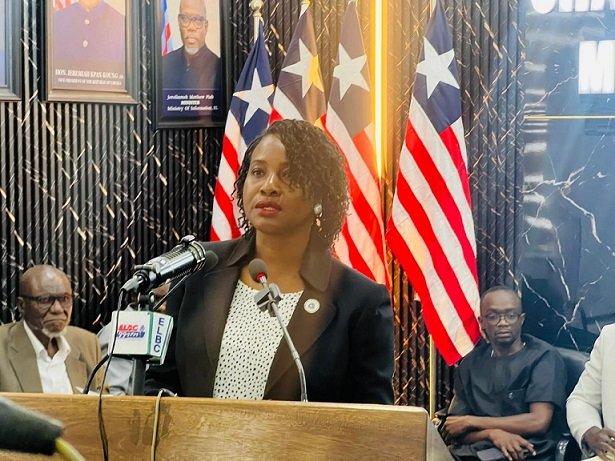
Dr. Sia Wata Camanor, acting Director General of the National Public Health Institute of Liberia, NPHIL, has assured the public that Liberia remains Ebola-free, but urged citizens to maintain proper hygiene and follow official public health guidance amid reports of Ebola virus disease in parts of the region.
Dr. Camanor made the statement during the regular press briefing at the Ministry of Information, where she outlined Liberia’s preparedness measures in response to the evolving Ebola situation in neighboring and other affected countries.
According to Camanor, the Government of Nigeria has confirmed its first reported case of Ebola virus disease in the Federal Capital of Abuja on October 20, 2026. The case involves a woman, who reportedly travelled from the Democratic Republic of Congo (DRC), transiting through Uganda, before receiving treatment at a private health facility in Abuja.
Nigerian health authorities have reportedly identified 44 contacts and have begun contact tracing, while the patient remains in isolation and receiving medical care.
The regional situation has heightened concerns about cross-border transmission. Figures presented at the briefing indicated that the DRC has recorded thousands of cases and deaths, while Kenya and Nigeria have also reported cases. Uganda and other countries were mentioned in connection with previous or ongoing outbreaks.
In response, the Government of Liberia, through the Ministry of Health and NPHIL, has intensified disease surveillance, preparedness, and preventive measures, particularly at the country’s ports of entry.
As part of its response, the government has released Travel Advisory No. 2 effective immediately, introducing additional screening and monitoring measures for travelers arriving from or transiting through countries affected by the outbreak.
Under the advisory, travelers are required to complete surveillance forms accurately and provide truthful information about their health status, recent travel history, and possible contact with sick individuals or deceased persons.
Travelers arriving from or transiting through the Democratic Republic of Congo will be required to undergo self-isolation for 21 days with daily monitoring by health professionals. Those arriving from or transiting through Uganda, Kenya, or Nigeria will also be monitored by health professionals for 21 days.
Health screening, including temperature checks, will be conducted at airports, land border crossings, and seaports. Anyone suspected of displaying symptoms of Ebola or another infectious disease will be managed according to the country's established port-of-entry standard operating procedures.
The advisory further requires travelers and transportation operators to observe infection prevention and control measures, including regular handwashing, using hand sanitizers, and avoiding unnecessary physical contact.
Any conveyance suspected of contamination involving a person, cargo, or human remains associated with Ebola or another infectious disease will be decontaminated at the point of entry.
Travelers who develop symptoms are advised to report immediately to the nearest health facility or contact the relevant health authorities through the emergency hotline numbers provided by the Ministry of Health. The travel advisory will be reviewed and updated as necessary.
Speaking on Liberia's response efforts, Dr. Camanor said NPHIL, in collaboration with the Ministry of Health and other partners, has strengthened surveillance at major entry points, including Roberts International Airport and land borders.
She identified border areas through which travelers enter Liberia, including locations in Grand Gedeh, Nimba, and Grand Kru counties, as important areas for heightened vigilance.
The institute is also monitoring travelers and participants attending major international gatherings, including the ongoing African Travel Championship, in collaboration with event organizers.