-Dismisses Gongloe’s Criticism
Courtesy: Closing argument
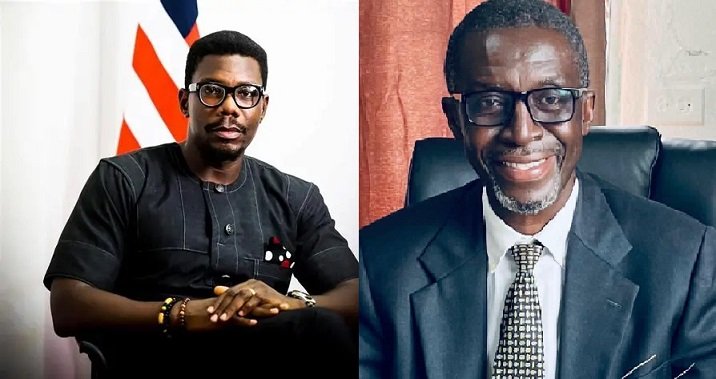
Counselor Kanio Bai Gbala has defended President Joseph Nyuma Boakai’s administration against criticism of its governance record, dismissed Counselor Gongloe’s concerns about the President’s recent trip associated with the United Nations General Assembly as politically motivated, outlining the Centrist Movement’s plans ahead of Liberia’s 2029 general elections.
Speaking on OK FM, Cllr. Gbala reaffirmed his support for President Boakai while acknowledging the need for faster infrastructure development, improved public services, and accelerated decentralization.
He argued that although the administration has made progress in governance and international partnerships, Liberians must begin to see more tangible results in their communities.
Gbala Defends Boakai’s Governance Record
Gbala said he prefers to assess the Boakai administration based on its performance rather than engage in direct comparisons with the previous government.
He emphasized that governance is a continuous process, requiring successive administrations to honor existing obligations while building on previous achievements.
“I support the government. I support the president, and I want the president to succeed,” Gbala said.
He argued that the administration has maintained the direction of the state and established an environment in which public officials understand that misconduct can result in suspension, dismissal, or prosecution.
To support his assessment, Gbala pointed to Liberia’s engagement with the Millennium Challenge Corporation (MCC) and the International Monetary Fund (IMF), describing these partnerships as important indicators of the country’s governance and economic reform efforts.
According to him, Liberia’s engagement with the MCC includes discussions surrounding a proposed compact, with energy and mining governance identified as priority areas.
He said investments in the energy sector could help address Liberia’s longstanding electricity challenges, while reforms in mining governance could improve natural resource management, increase public revenue, and ensure that communities benefit more directly from the resources extracted from their land.
Gbala also referenced a recent IMF review and the reported release of an additional US$50 million under Liberia’s Extended Credit Facility arrangement.
However, he acknowledged the importance of translating international partnerships and financial commitments into measurable improvements in the lives of ordinary Liberians.
Calls for Faster Development and Decentralization
Despite defending the administration, Gbala acknowledged that the pace of infrastructure development remains a concern.
He called on the government to accelerate the implementation of projects that directly affect citizens, including roads, hospitals, schools, and recreational facilities.
According to him, establishing governance structures and maintaining international partnerships are important, but citizens also expect visible improvements in their daily lives.
He urged the administration to intensify its development efforts during the remainder of its term, warning that the government's performance will increasingly be judged by its ability to deliver practical results.
Gbala also called for faster implementation of decentralization, arguing that the concentration of public services and resources in Monrovia continues to disadvantage citizens in other counties.
He maintained that decentralization should involve transferring appropriate resources, responsibilities, and decision-making authority to local institutions to improve service delivery and expand development opportunities beyond the capital.
According to him, empowering county-level institutions would reduce pressure on Monrovia and ensure that citizens outside the capital have better access to essential public services.
Gbala Dismisses Gongloe’s Criticism of Boakai’s UN Trip
Gbala also challenged criticism by Counselor Gongloe concerning President Boakai’s recent trip associated with the United Nations General Assembly.
Gongloe reportedly questioned the President’s 23-day absence from Liberia, the size of the delegation, the cost of the trip, and the tangible results achieved.
He also called for greater public accountability regarding the benefits Liberia received from the visit.
Responding to the criticism, Gbala said he respects Gongloe as an academic, legal practitioner, and senior figure in Liberian society but disagrees with his assessment of the President’s international engagement.
Gbala argued that Gongloe’s involvement in active party politics should be considered when assessing his public statements, describing his criticism of the administration as politically motivated.
According to Gbala, political actors often highlight the shortcomings of a sitting government as part of efforts to present themselves as alternatives.
He maintained, however, that his disagreement with Gongloe’s position does not diminish his respect for him as an individual.
Defends Delegation, Emphasizes Diplomacy
On the substance of the criticism, Gbala argued that the President’s trip should be assessed within the broader context of diplomatic engagement, diaspora relations, and investment promotion.
He said Liberia’s diaspora conference was intended to attract investment and mobilize support for key sectors, including health, education, infrastructure, and national development.
According to Gbala, the participation of officials responsible for different sectors was necessary to communicate the country's priorities and engage potential investors and development partners.
He rejected the suggestion that the size of the delegation alone demonstrated wastefulness, arguing that relevant government officials were needed to present investment opportunities and establish working relationships.
Gbala also challenged the expectation that a president must return from every international trip with immediate financial commitments to demonstrate success.
He argued that diplomacy often produces results over time through negotiations, partnerships, and agreements that may not immediately translate into financial benefits.
Nevertheless, he acknowledged the importance of ensuring that international engagements produce meaningful outcomes.
The effectiveness of the trip, he suggested, should ultimately be assessed by the meetings held, commitments secured, associated costs, and results achieved.
The debate has renewed attention on public accountability, with citizens having a legitimate interest in understanding how public funds are spent and what benefits the country receives from official foreign trips.
Centrist Movement Outlines Plans Ahead of 2029
Beyond his defense of the Boakai administration, Gbala outlined the Centrist Movement’s ongoing activities and plans to strengthen its presence ahead of the 2029 elections.
He maintained that the movement remains active through grassroots engagement, despite concerns about its public visibility.