By Lassana F. Donzo
For one 15-year-old girl in Montserrado County, staying in school has given her an opportunity to pursue a future different from the one once expected for her.
Sent from Guinea to Liberia at the age of seven to live with her grandmother, the girl said she was expected to help with household responsibilities and eventually marry when she turned 15.
But members of her family later recognized the importance of giving her an education.
Today, she is a Grade 8 student and dreams of becoming a nurse.
“I am happy that I am in school because I want to have a future,” she said.
She said she enjoys learning and hopes to become a nurse so she can help people in her community.
Her experience contrasts with that of another girl whose education was interrupted by marriage and motherhood.
At 16, the girl was in Grade 10 and also dreamed of becoming a nurse.
She said she was unable to complete high school after getting married while she was still in Grade 10.
After giving birth to her first child, she tried to continue her education through night school.
However, she later stopped attending school following difficulties in her marriage and subsequently became pregnant with her second child.
She is now focused on caring for her children.
“Becoming a nurse is possible but difficult because I have to take care of my home and kids,” she said.
Despite the challenges, she said she still wants to become a nurse.
“I love nursing and I want to help people,” she said.
She said marriage and motherhood changed her priorities and made it difficult to find time for school.
“Marriage changes a lot because time won’t be in my favor again,” she said.
Teacher describes barriers to girls’ education
A teacher at an Islamic school in Liberia, whose identity and the name of the school are being withheld, said marriage can make it difficult for girls to remain in school.
The teacher said he had encountered a case involving a girl who left school after getting married because her husband could not financially support her education.
According to the teacher, girls may enter marriage through different circumstances, including family decisions, personal decisions and financial difficulties.
He said married girls who receive support from their husbands or families may sometimes return to school, but household responsibilities can make regular attendance difficult.
Some married girls, he said, may arrive late or eventually stop attending altogether.
The teacher urged parents to support girls to remain in school and complete their education before taking on marriage and other adult responsibilities.
Programs support girls’ education
The experiences of the girls come as Liberia continues efforts to improve access to education and support girls who face barriers to remaining in school.
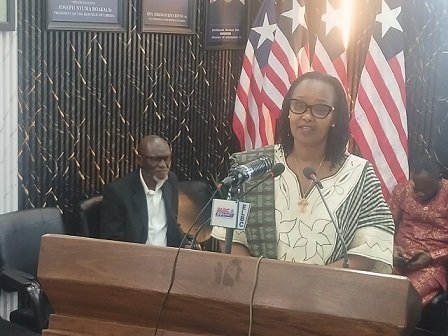
Melchizedek S.P. Dologbay, Assistant Director for Media and Photography, Office of the First Lady, Ministry of State for Presidential Affairs, Republic of Liberia, said the “Her Voice of Future” project, funded by the Organization of African First Ladies for Development (OFLAD), is targeting about 12,000 adolescent girls in 50 schools across Montserrado, Grand Bassa, Nimba, Margibi and Bomi counties.
Dologbay said the project focuses on reproductive health, mental health, substance abuse and addiction, as well as gender-related issues affecting adolescent girls.
He said the program brings together stakeholders from the education, health and gender sectors to provide information and support to girls in schools.
According to Dologbay, the selection of the counties was informed by challenges affecting adolescent girls, including teenage pregnancy and school dropout.
He said the project was designed as a one-year initiative, with reports expected as the project approaches its renewal period.
Merck Foundation partnership
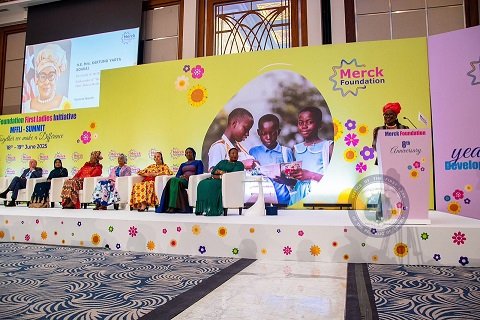
Dologbay also said the Office of the First Lady is implementing a scholarship program in partnership with the Merck Foundation under its “Educating Linda” initiative.
He said the scholarship initially supported 20 academically strong girls from disadvantaged backgrounds in public, private and faith-based schools before the number was increased to 40.
According to Dologbay, beneficiaries are required to maintain an average score of at least 85 percent to remain on the program.
He said the First Lady’s Office collects beneficiaries’ report cards, transcripts and other academic documents at the end of each academic year and submits them to the Merck Foundation as part of the program’s accountability requirements.
Dologbay said the scholarship has helped some girls who previously faced financial difficulties that affected their education.
He said some parents had to sell goods or face other financial challenges to keep their children in school, while some girls engaged in market activities after school, leaving them with less time to study.
According to Dologbay, the scholarship has allowed beneficiaries to concentrate more on their education.
He also said the partnership has provided storybooks and educational materials to the First Lady’s Office, with some materials distributed to selected schools.
School bags and other educational supplies have also reportedly been distributed to selected schools based on identified needs.
Dologbay clarified, however, that the materials are not distributed to every school in Liberia because supplies are limited.
Policy identifies barriers
Liberia’s National Policy on Girls’ Education identifies economic pressure and early marriage among factors that can affect girls’ education.
The policy states that some parents, particularly in indigenous communities, may encourage girls to marry at an early age because of economic circumstances and the expectation that marriage can provide support for parents and dependents.
It also warns that early marriage can deprive girls of education or meaningful work and contribute to persistent poverty.
The policy further identifies the health and social risks associated with child marriage, including increased vulnerability to violence, abuse and exploitation.
Keeping girls in school
The experiences of the girls interviewed for this story show how circumstances outside the classroom can shape whether a girl completes her education.
One girl remains in school and is working toward her dream of becoming a nurse.
Another had her education interrupted by marriage and motherhood but still hopes to pursue the same profession.
Their experiences raise questions about whether existing education and empowerment programs are reaching girls most at risk of dropping out and whether enough support is available for girls who want to return to school after marriage or childbirth.
For Liberia, improving girls’ education requires more than enrolling girls in school. It also involves addressing the financial, social and family pressures that can prevent them from completing their education.
The story is produced in line with the Merck Foundation’s efforts to promote girls’ education and empowerment, while highlighting the experiences of girls facing barriers to remaining in school and pursuing their future goals.