By Nvasekie N. Konneh
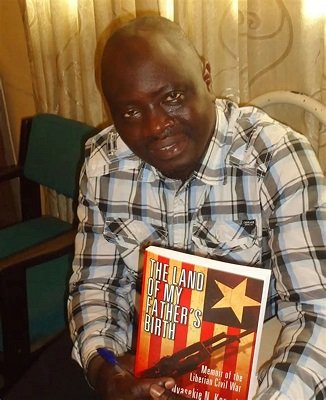
The title of Nvasekie Konneh's book is, The Land of My Father's Birth, Memoir of the Liberian civil war; and the title of Vamba Sherif's book is The Land of My Fathers. The titles of these books by authors from the same ethnic, cultural and religious backgrounds are purely coincidental.While The Land of My Father's Birth is a non-fictional account of the Liberian civil war from the author's perspectives, the Land of My Fathers is a fiction dealing with the history of the African American settlement in West Africa that became Liberia. Vamba Sherif's The Land of My Fathers was first published in Dutch in Netherland in 1999 and the English version was published in 2016. Nvasekie Konneh's The Land of My Father's Birth was published in 2013. In the nutshell, the two books tell the Liberian stories in non-fiction and fiction.
The Land of My Father's Birth, Memoir of the Liberian Civil War
The Liberian civil war affected all Liberians, one way or the other. As a result, all Liberians have some stories of personal experiences of the war that lasted for 14 years. The war caused internal and external dislocation of thousands of people and so many lost loved ones, relatives, and friends. Every Liberian has stories to tell about how they got caught up behind warring faction lines or made it as refugees in other countries. There has not been enough books published telling stories of these experiences of the war. Unlike Sierra Leone, Sudan, or Ivory Coast where books with stories of former child soldiers and survival of war have been published, not many personal stories in the form of memoir have been published by Liberians. Nvasekie Konneh's memoir, "The Land of My Father's Birth" certainly sets the pace to fill that void. This 250 page book gives the panoramic views of the author's experiences of growing up in pre-war Liberia, highlighting his multicultural heritage of Mandingo and Mano ethnicities; fleeing from the war doomed Monrovia, seeking refuge in Abidjan, Ivory Coast where he met and befriended many Ivorian friends; cruising the Atlantic Ocean, the Mediterranean or Persian Gulf in the bellies of US Navy war ships deployed in Europe and Middle East, highlighting port visits to such far away places as Jerusalem/Bethlehem in Israel/Palestine; Suez Canal, Egypt, Dubai, United Arab Emirate, Paris, France, as well as "Looking for Fatim Diop in Dakar," Senegal. The book is a multicultural celebration of ethnic and religious diversity which has generated lots of conversations with historical, socio-political, art and cultural dimensions in and out of Liberia. For those who have been following this prolific writer since the early 90s, he has diverse interests as a writer whose writings have been extensively published in newspapers, magazine, as well as countless websites in and out of Liberia. Nvasekie Konneh's documentary, Ethnic and Cultural Diversity Part 1 & 2 was inspired by the book, The Land of My Father's Birth.
The Land of My Fathers
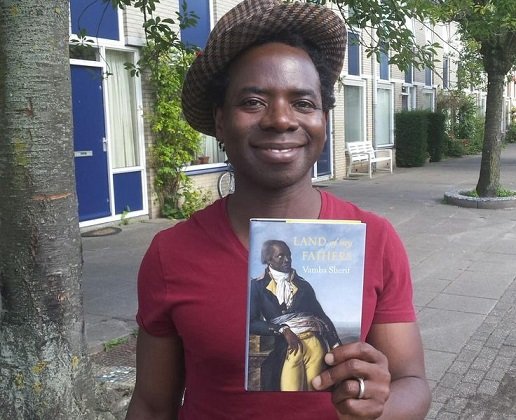
Vamba Sherif was born in Kolahun, Liberia in 1973. In his early teens he moved to Kuwait, where he completed secondary school. The First Gulf War compelled him to leave Kuwait and settle first in Damascus, Syria, and then in The Netherlands, where he read Law. Vamba is also a journalist and film critic. His passions include music of every kind, and film. He is the author of several novels, among them are The Land of My Fathers, The Emperor's Son, Bound to Secrecy, among others.
Vamba's The Land of My Fathers is divided into four parts. The first part is about Edward Richard and his journey to Libeira as an African American repartriate. According to the author, the choice and the development of the lead character, Edward Richard, was inspired by the real story of Wilmot Blyden, a preimminent Liberian scholar, activist and politician who authored many books, including the Chrisitianity, Islam and the African Race. Edward Richard was one of the thousands of African Americans who decided to come to Liberia in search of freedon and equality. In the ship that he boarded were "carpenters, stonemasons, tailors, and a preacher.
But the last was not the only one there who had embraced the word of the Lord. Seated or standing in groups, the men revelled in dreams of a better life in a republic with abundant land and the opportunity to establish a trade." These were men and women who were leaving everything they had known behind to seek for dreams in the unknown distant land in Africa. They were motivated by the same hope and dream to come to a new place in West Africa just like many of us are inspired today to seek for economy opportunities in the Americas. While they were doing so out of the desire to escape the racist culture in the Americas, we are motivated today by the desire for economic opportunitied as we dream and risk everything for America. According to Edward, "Nowhere in the wide world was the freedom desired by black people of America fulfilled more than in the coastal republic of Liberia." This shows how much of a promise of freedom and equality Liberia held for these people in these bygone eras.
Unlike many of the settlers who settled in and around Monrovia, Edward Richard decided to go way in the interior where he would interact with the "real Africans." He wanted to integrate into real African culture and tradition and the only way he thought he could do that was to go way in the interior of the country.
On the ship, he "heard dreams being exchanged with conviction and hope." He said that as participated in these conversations, his "dreams differed from all the others. I cherished freedom and had longed for it all my life, but that was not why I was heading for Africa, for the land of my fathers. What made me trade America with all its promises for a distant shore was perhaps greater than freedom." As the ship set sail from the shores of America, Edward stretched out his hands to well-wishers on the pier who had come to wish their relatives and friends goodby as they headed to Liberia. Accoding to him, "I was resolved to put America and everything about it behind me and to forge a new beginning for myself in Liberia."
As he journeyed into the interior being escorted by some indigenous of the area, he observed the village, "nestling under a chain of mountain looked mysterious." He went on to say that my "host led me to his compound and introduced me to his wife, Miatta, and his son, Salia." With that introduction, he said, he had reached his "destination" in the interior of Liberia.
Most of the stories told of the settlers are about the exploitation of the indeginous population but in the case of Edward Richard, there is a different story. For him, he made the genuine effort to integrate in the authentic African culture.