Courtesy: SmartNews
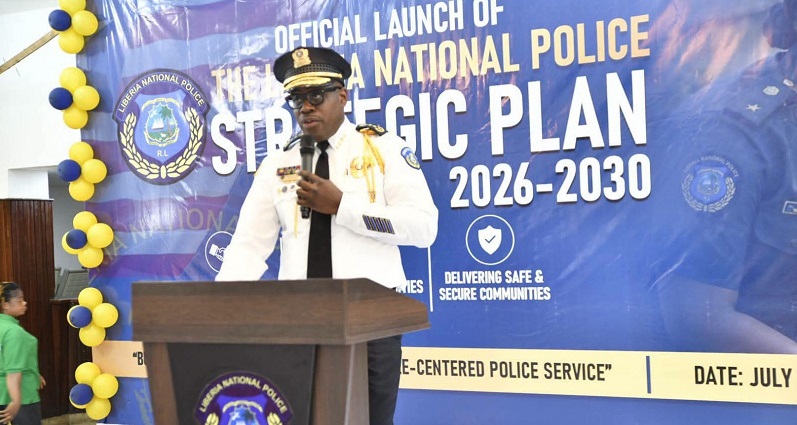
Liberia National Police (LNP) Inspector General Gregory O.W. Coleman has launched an ambitious five-year reform agenda aimed at restoring public confidence in law enforcement, acknowledging widespread public frustration with policing while declaring that accountability, professionalism, and stronger community partnerships will determine the future of the institution.
Speaking Thursday, July 2, during the official launch of the Liberia National Police Strategic Plan 2026–2030, Coleman described the document as more than an institutional blueprint. Instead, he portrayed it as a renewed national commitment to transform the police into a professional, transparent, and people-centered service capable of meeting the security expectations of all Liberians.
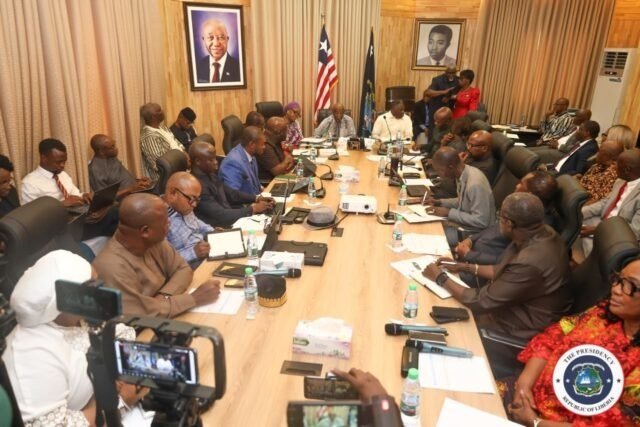
The launch, held under the theme “Rebuilding Trust, Centering the People, and Securing Liberia Together,” brought together senior government officials, members of the Legislature and Judiciary, diplomats, development partners, civil society organizations, traditional and religious leaders, members of the media, and officers of the Liberia National Police.
Opening his address, Coleman declared that the event represented “more than the launch of a strategic plan,” describing it as the renewal of a national promise that every Liberian deserves security without fear, equal access to justice, and policing grounded in professionalism, accountability, and respect for human dignity.
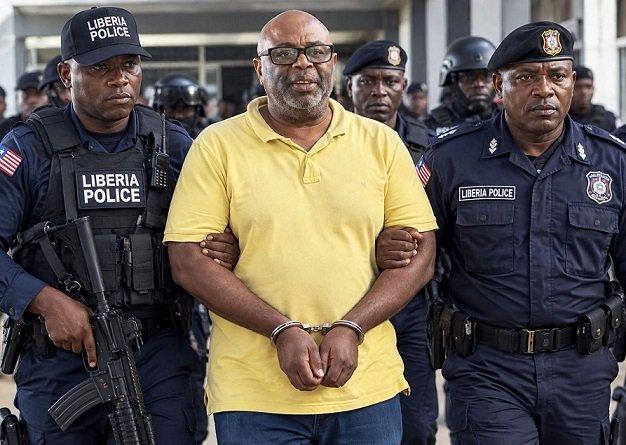
His remarks come at a time when the Liberia National Police is under heightened public scrutiny over its handling of major criminal investigations, particularly the ongoing probe into the reported US$19.2 million cocaine seizure at Roberts International Airport. Although Coleman did not directly reference the investigation, his repeated emphasis on rebuilding public confidence underscored the importance of restoring trust in national security institutions.
“For too long, many citizens have looked at policing through the lens of frustration, delay, mistrust, and unmet expectations,” Coleman acknowledged.
“We hear those concerns. We acknowledge them. And today, we respond not with words alone, but with a structured path for reform, service, and measurable progress.”
According to Coleman, the Strategic Plan places ordinary Liberians at the center of policing by responding to the concerns of parents seeking safer communities, market women conducting business without harassment, motorists demanding order on public roads, young people searching for opportunity instead of crime, and communities striving to prevent violence before it erupts.
“The true measure of policing is not force. It is trust. It is not fear. It is legitimacy. It is not power. It is service,” he emphasized.
The Inspector General explained that the five-year strategy is anchored on three principal priorities: strengthening laws and institutional policies, improving accountability throughout the police service, and enhancing operational effectiveness across Liberia.
Coleman argued that meaningful police reform cannot occur unless officers themselves receive the support necessary to perform professionally.
He said officers expected to protect society must be equipped with quality training, decent housing, healthcare, mental wellness services, career development opportunities, and fair compensation.
“We cannot demand world-class policing from unsupported officers,” he stated.
“When officers are strengthened, service improves. When morale rises, misconduct falls. When dignity is restored internally, respect is delivered externally.”
Beyond internal reforms, Coleman called on the Government of Liberia, the Legislature, development partners, and international allies to provide sustained financial support for implementing the Strategic Plan.