-MAKES KEY RECOMMENDATIONS
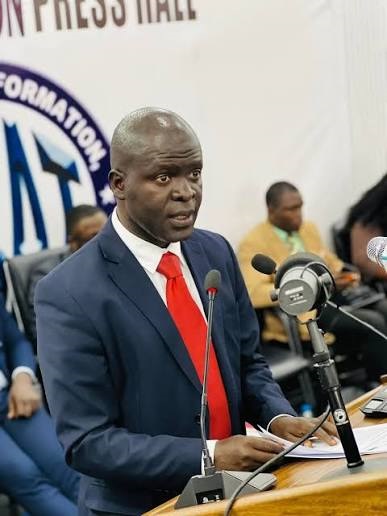
The Executive Director of the Environmental Protection Agency (EPA), Dr. Emmanuel K. Urey Yarkpawolo, has disclosed key findings he said are affecting the environment and called for stronger cooperation amongst government institutions and stakeholders to combat illegal mining and protect Liberia's environment.
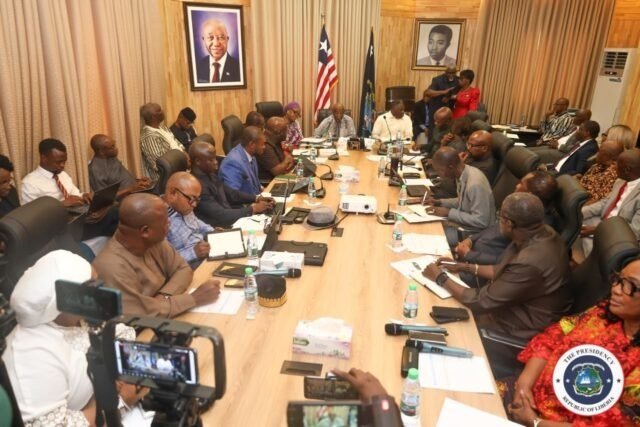
Speaking recently when he appeared before the House Committee on Lands, Mines, Energy, Natural Resources, and Environment at the House of Representatives, the EPA Executive Director warned that illegal mining, uncontrolled logging, and other harmful activities are placing significant pressure on the country's natural resources.
According to Dr. Yarkpawolo, the EPA's nationwide assessment identified several serious environmental concerns, including widespread land degradation, indiscriminate cutting of trees, pollution of rivers and streams, destruction caused by artisanal mining, and increasing deforestation.
The hearing focused on three major issues: the findings of the EPA's nationwide environmental assessment tour, environmental challenges affecting communities across Liberia, and discussions on proposed environmental legislation currently before the House of Representatives.
"The environment belongs to all of us. The proper use of our environment will save humanity," Dr. Yarkpawolo emphasized.
The EPA Executive Director also expressed concern over the growing use of mercury in artisanal gold mining. He explained that mercury contaminates water sources, accumulates in fish consumed by people, and can lead to serious health problems, including neurological and cognitive disorders.
To strengthen environmental monitoring, Dr. Yarkpawolo disclosed that the EPA has established a laboratory staffed with trained chemical experts to monitor and analyze environmental contaminants across the country.
Citing findings from the EPA's 2024 report, he revealed that numerous illegal foreign miners, particularly nationals from Burkina Faso, were identified operating within Liberia's mining sector.
While acknowledging that the EPA has imposed fines on companies found violating environmental regulations, Dr. Yarkpawolo stressed that financial penalties alone are not enough to address environmental damage.
"Fines are not the solution. Environmental restoration is the key," he stated.
Sharing additional findings from the EPA's 2026 nationwide assessment, Dr. Yarkpawolo disclosed that illegal mining operations involving excavators have become widespread. He explained that many Class B and Class C mining operators are either operating without proper licenses or using heavy equipment beyond the scope of their permits.
He further warned that cyanide, a chemical legally restricted to Class A mining operations, is increasingly being used by small-scale miners, creating serious environmental and public health risks.
To address these growing concerns, the EPA plans to introduce a national excavator registration and tracking system. Under the initiative, all excavators imported into Liberia will be registered, their owners identified, and GPS tracking devices installed to monitor their movements and discourage illegal mining activities.
Dr. Yarkpawolo concluded by urging all stakeholders to move beyond debates of "the rich versus the poor" and instead work together to protect Liberia's natural resources through stronger laws, effective enforcement, environmental restoration, and responsible stewardship.
He also provided recommendations on proposed amendments to Liberia's environmental laws currently under consideration by the House of Representatives.