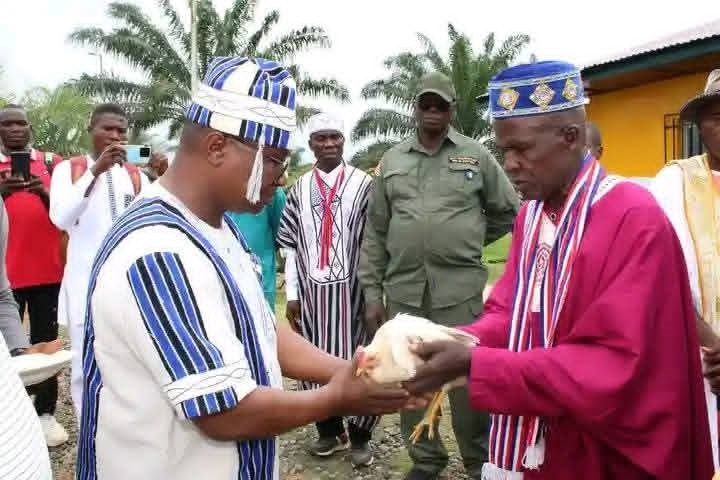
-GOVERNMENT TO SACK SEVERAL MAYORS, CHIFS IN SOUTHEAST
Under the Unity Party-led government, thousands of Chiefs and City Mayors will be victims of "decentralization plan".
Grand Kru County is high on the list of cities to be abolished as the Ministry of Local Government have unilaterally set her threshold. It is not known if the Local Government sort legislative action to cancel cities.
Pundits believe that cancelation of city is million miles away from the reality of decentralization, instead, it is a witchhunt.
They argued that the cities to be canceled were created by Arts of the Legislature, and if Local Government would want to canceled, the Arts should be repealed.
In an effort to actualize government' s plan, in
Barclayville, Jul 2, 2026 the Acting Minister of Local Government Edward K. Mulbah on Wednesday defended the Government’s decision to reduce Liberia’s cities from 141 to 33, saying the decentralization and city rationalization plan will save resources, accelerate development, and improve citizens’ livelihoods.
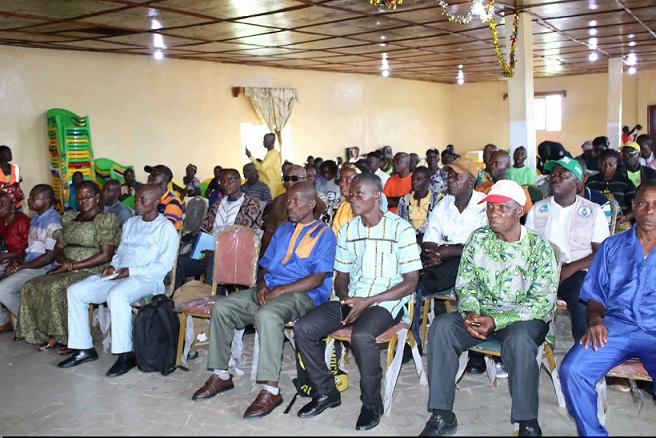
Speaking at a daylong citizens’ engagement town hall at Barclayville City Hall, Minister Mulbah told Grand Kru residents the move was not political or arbitrary. It was based on technical surveys conducted by development experts who measured communities against constitutional and legal standards for city status.
“Only 33 cities qualified and met constitutional requirements under the law,” Mulbah stated. “The remaining cities will be reclassified as townships so resources can be targeted where they are needed most.”
He said the reform will allow government to save significant funds currently spread across 141 cities. Those savings will be redirected to priority sectors including health, education, security, and local infrastructure.
Grand Kru currently has 32 cities. Under the new categorization, the county’s number of cities will be reduced, while communities that do not meet the threshold will transition to township status.
To qualify as a city, a community must have at least 10,000 residents and provide running water, electricity, schools, health facilities, courts, police stations, and waste management centers. A township requires a minimum population of 5,000.
“After surveys, we have 295 townships nationwide, with 22 already qualified,” Mulbah noted.
Minister Mulbah said decentralization is a practical step to fulfill President Boakai’s vision of “taking government to the people.” He cited three laws guiding the process: the Local Government Act of 2018, the Revenue Sharing Law of 2022, and the Ministry of Local Government Act of 2025.
He urged Grand Kru citizens to take an active role in county governance to ensure growth and sustainability. The Minister also announced logistics support approved by the President’s office for chiefs, community colleges, women’s groups, and the County Development Planning Unit.
“For the Local Government Act to work effectively, we must establish a Local Government Institute to build capacity at the county level,” he concluded.
The Citizens’ Engagement Meeting gave residents a direct platform to share concerns and discuss local governance priorities with government officials.