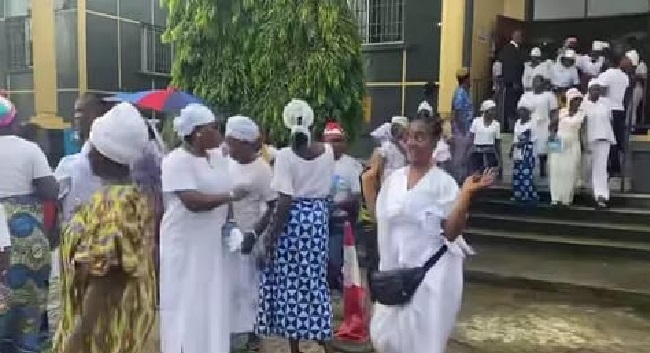
Prayer warriors dressed in white gathered at the Temple of Justice on Tuesday, June 23, 2026, to support former Chief of Protocol Nora Finda Bundoo as she made her first appearance before Criminal Court “C” in connection with corruption-related allegations being pursued by the Assets Recovery and Property Retrieval Task Force (AREPT).
The unusual display of faith and solidarity drew attention from court observers as Bundoo, a former close aide to ex-President George Weah, appeared before the court amid an ongoing legal battle that has become part of the government’s broader campaign to investigate and recover allegedly misappropriated public assets.
Madam Bundoo arrived at the courthouse accompanied by supporters and dozens of women clad in white garments, many of whom identified themselves as prayer warriors. They gathered to offer prayers, worship, and spiritual encouragement as the former presidential aide faced one of the most consequential moments of her public career.
The former Chief of Protocol, who once occupied one of the most influential positions within the Executive Mansion, is facing allegations linked to ongoing asset recovery efforts targeting former government officials. The case has attracted considerable public attention because of Bundoo’s prominent role in the administration of former President George Weah.
Throughout the proceedings, members of the prayer group sang hymns, offered prayers, and publicly expressed confidence that divine intervention would guide the outcome of the case. Their presence transformed the courthouse environment into a scene that blended legal proceedings with public expressions of faith.
The gathering also prompted discussion among Liberians on social media, particularly Facebook, as well as among critics of the former President Weah administration, about the intersection of religion, public accountability, and justice. While supporters maintained that prayer was intended to provide spiritual strength and encouragement, others viewed the display as a reflection of the intense public interest surrounding corruption-related cases involving former officials.
The proceedings come as the Boakai administration continues efforts to investigate allegations of corruption and recover public assets believed to have been improperly acquired. AREPT has repeatedly stated that its mandate is to pursue accountability and ensure that individuals suspected of wrongdoing face due process under the law.
For many Liberians, the case represents more than the legal troubles of a former government official. It has become another measure of the country’s commitment to transparency, accountability, and the fight against corruption.
The appearance of prayer warriors at the court underscored the emotional and symbolic dimensions of the case, highlighting the loyalty Bundoo continues to command among some supporters despite the allegations against her.
As the case progresses, public attention is expected to remain focused on the evidence presented by prosecutors and the defense mounted by Bundoo’s legal team. The proceedings are likely to be closely watched as part of the broader national conversation on accountability and governance.
While prayers and worship may provide comfort and hope to the accused and her supporters, the ultimate determination of guilt or innocence will rest on the evidence presented before the court and the judgment rendered through Liberia’s legal process.