By Omari Jackson
In the grand, chaotic theater of West African politics, there is a sub-genre of performance art that I like to call "The Prophet’s Predicament." The rules are simple: you sit in a comfortable chair, don a very serious robe, look into a camera, and announce that the current leader of a nation is confused, exhausted, and—for good measure—should probably be replaced by a sudden, brisk military coup. It’s a bold strategy, Cotton; let’s see if it pays off.
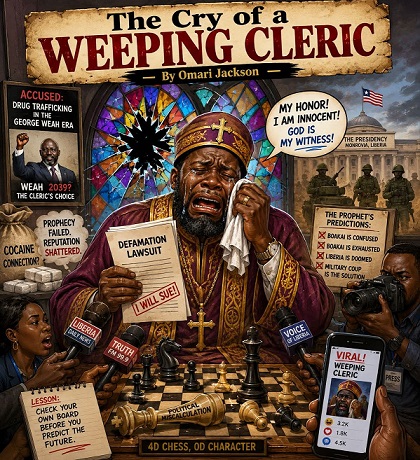
Enter Nigerian cleric Ayodele, who recently looked into his crystal ball, saw President Joseph N. Boakai, Sr. of Liberia, and decided that the man wasn't just tired—he was practically sleepwalking toward a national catastrophe. Ayodele, sensing a vacuum of leadership, essentially suggested that a military takeover might be the “reset button” Liberia needs. Because, historically speaking, nothing says "stability and prosperity" like a sudden interruption by the armed forces.
But alas, the Prophet had miscalculated his audience.
You see, in Liberia, the Ministry of Information does not deal in "thoughts and prayers." They deal in "receipts." Minister Piah, clearly having had quite enough of prophetic backseat driving, did not reach for a Bible to debate theology. Instead, he reached for a shovel and began digging up the cleric’s past. Piah casually lobbed an allegation that hit the cleric right in the holiness: he accused the good man of being involved in the illegal drug trade back in the George Weah era—the same George Weah who, conveniently enough, is apparently the cleric’s favorite candidate for a 2029 political revival tour.
The shift in tone was instantaneous. The man who had been prophesying political ruin one moment was suddenly clutching his pearls and weeping for his honor the next.
The cleric is now threatening to sue. He is outraged. He is indignant. He is, by all accounts, performing a masterclass in the "How Dare You Accuse Me of Crimes While I’m Busy Accusing Presidents of Treason" defense. Liberians, watching this unfold from their porches, are witnessing a spectacular reversal of roles: the man who claimed to see the future failed to predict that throwing stones from a glass cathedral might lead to someone throwing a massive, drug-trafficking-shaped brick right back through his stained-glass window.
It is a delicious irony. Ayodele wanted to talk about military coups and national suffering, but now he is stuck talking about court summons and character assassination. He is weeping for his honor, while the public is busy making popcorn.
In the end, the moral of this story is simple: if you are going to suggest that a president is confused, make sure your own legal standing is crystal clear. Otherwise, you might find yourself trading your prophetic robes for a lawyer’s suit, crying in a courtroom instead of commanding attention on social media.
As for Liberia, the presidency remains occupied, the military is presumably busy doing military things, and the cleric is learning the hard way that when you try to play 4D chess with political reputations, you should probably check your own board for drug-related landmines first.
The End