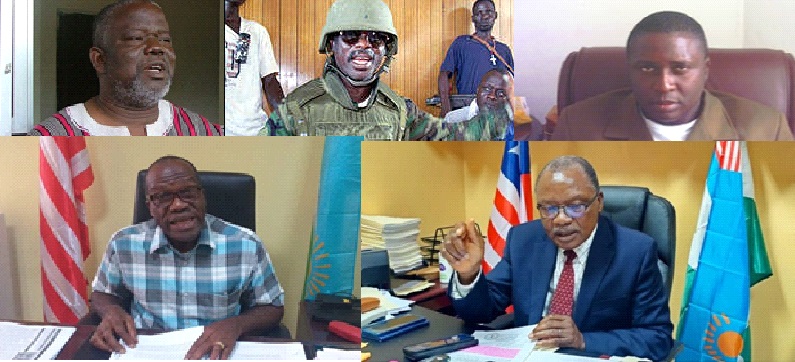
-Boakai Takes No-Turning Back Posture
Seemingly, the extraordinary criminal court the Truth and Reconciliation Commission, TRC, had envisaged is nearing reality as a bill seeking the establishment of an extraordinary criminal court to prosecute war criminals in Liberia, has reached the Legislature.
It was then in 2009 when the Commission laid the ground work for the establishment of a hybrid-styled court to be presided over by both Liberian and international lawyers, independent from the Liberian judicial system.
Late Nimba County Senator, Prince Y. Johnson, whose name is the first on the TRC’s list of individuals, who bear greatest responsibilities of the war had called for a revision of the Commission’s final report, but did not succeed up to the time of his death.
If established, the court will adjudicate cases of gross violations committed during the long years of war in the West African Country as a move to set a precedence to deter war and other crimes.
A list of individuals provided by the TRC that could potentially be prosecuted included eight heads of warring factions and 116 others, who the TRC report also alleged to have been the most notorious perpetrators based on testimonies of victims and witnesses.
But since the TRC report, successive administrations have taken little or no action to implement its recommendations, leading to heartbreaks and disappointments amongst war victims, many of who are living with pains of bullet wounds still in their bodies and the frustration of still seeing individuals, who caused the mayhem parade the corridors of power.
Many of the individuals suspected of war crimes have turned national decision-makers or served in high profiled positions that they used to stall the creation of the court.
As it stands, it is likely the current administration of President Joseph N. Boakai has taken a no-turning-back posture on ensuring that the court is established by all cost.
The President has received the draft legislation for the establishment of a special war crimes court and a national anti-corruption court. The document was delivered on Wednesday to the office of the President at the Executive Mansion on Capitol Hill by the office for the establishment for the war crimes court.
As this Paper has heard, the National Legislature has already received the draft legislation for its reconsideration.
President Boakai has linked the initiative to Liberia’s international obligations and its reputation within the global community.
The proposed courts, Boakai said, are intended to strengthen national systems rather than target individuals.
The President linked the initiative to Liberia's international obligations and its reputation within the global community, stressing that accountability is essential for national credibility.
He noted that Liberia Liberia must demonstrate its commitment to justice, human rights, and international obligations, adding that accountability remains essential for justice, national reconciliation, and long-term development,
The establishment of a war and economic crimes court, it can be recalled, was one of Boakai and his Unity Party campaign promises during the 23 national elections that catapulted him to power.